COLLECTING AREA · ULM · NEU-ULM
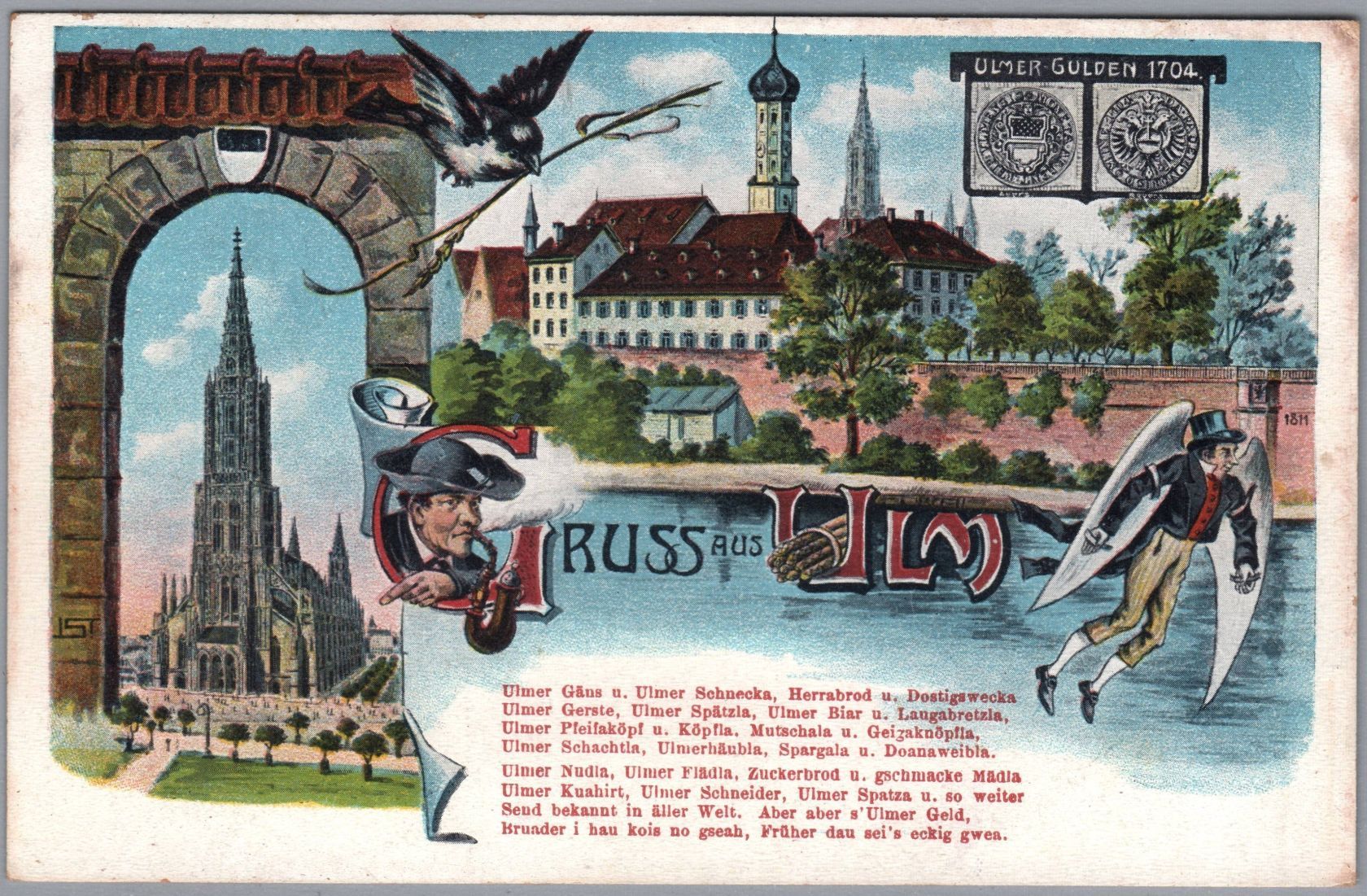
The Minster, the town hall, the Danube banks and the Tailor of Ulm – few towns in southern Germany appear on old postcards in such variety as Ulm. And there is a speciality found only here: two towns, two states, two postal administrations.
Ulm postcards in our shop →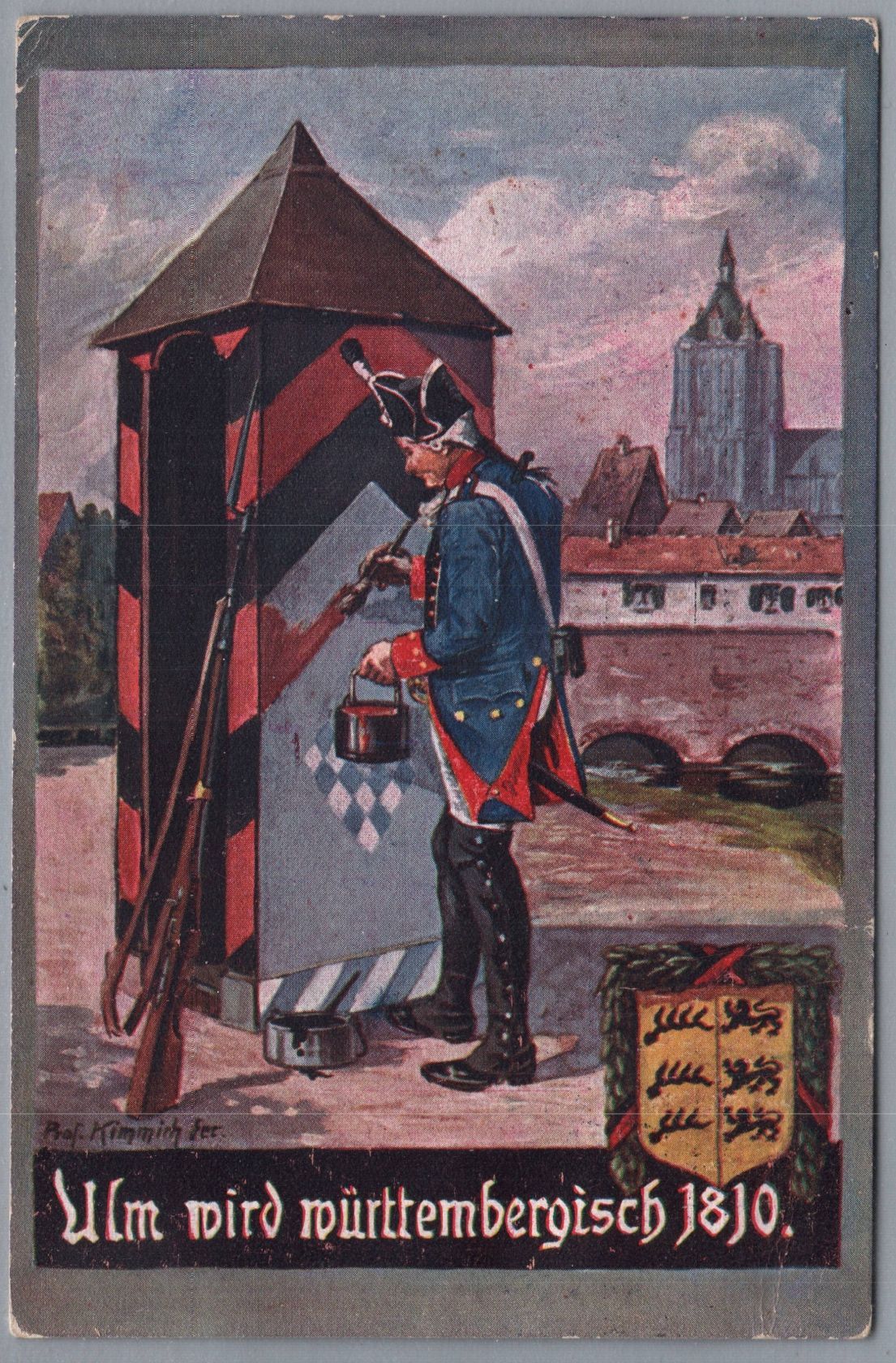
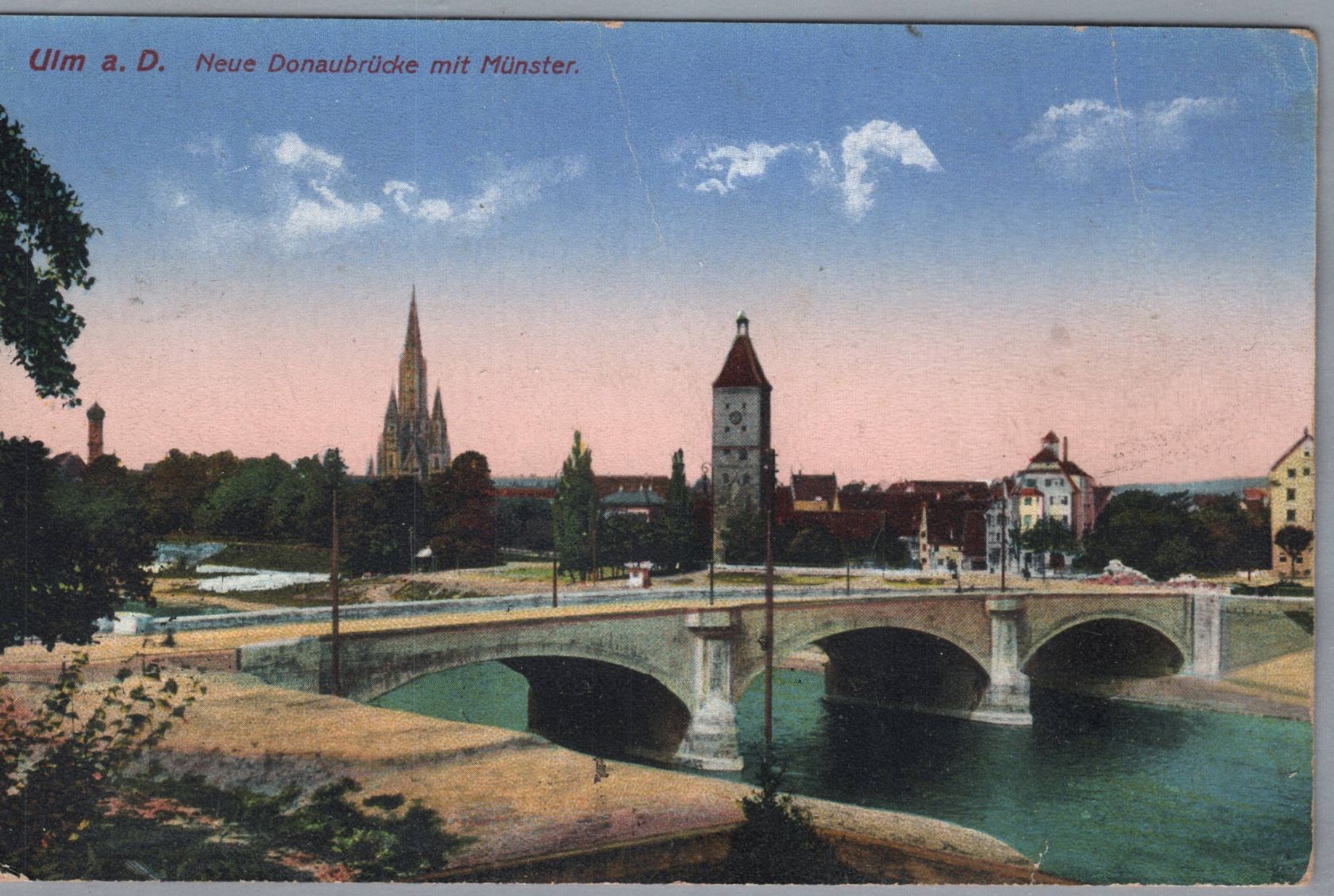
Since 1810 the Danube has formed the border: Ulm went to the Kingdom of Württemberg, while the opposite bank stayed Bavarian – and that is where Neu-Ulm grew up. This had lasting consequences for the post. Ulm used Württemberg stamps until Württemberg switched to the stamps of the Reichspost in 1902. Neu-Ulm used Bavarian stamps, right up to 1920.
As a result, letters and cards posted on the same day on either side of the Danube often carry quite different stamps and postmarks. It is exactly these contrasts that make Ulm and Neu-Ulm so appealing to collectors of local postal history.
Paris Dimitriadis from our team collects and researches the postal history of Ulm. The following four items come from his exhibits – they show how the great upheavals of Ulm’s history are reflected on letters and cards.
UNTIL 1802
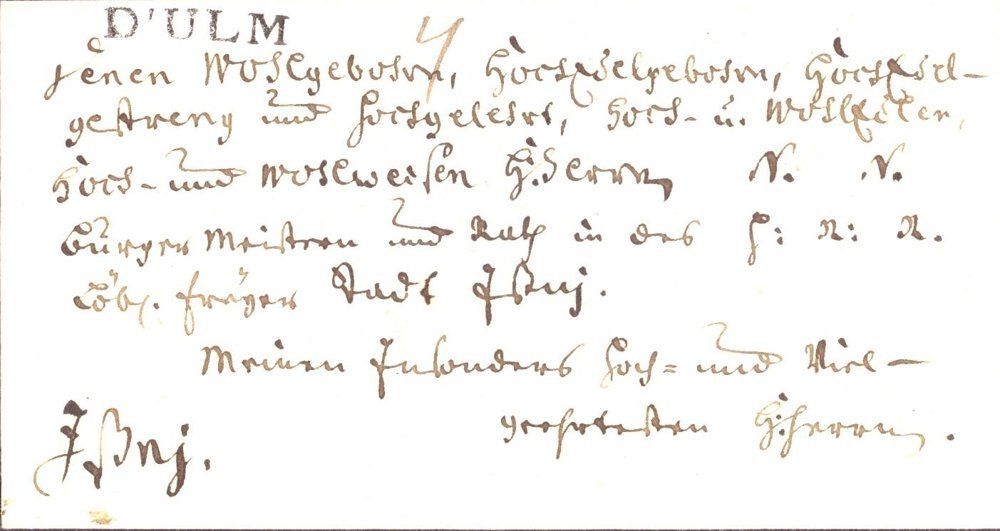
The Free Imperial City
For centuries Ulm was a Free Imperial City – with its own mint and trade reaching from the Netherlands to Italy. Letters do not yet bear stamps; the place of posting is shown by handwritten notes or early handstamps such as the “D’ULM” on this letter of 1785 to the mayor of Isny.
1802–1810
Eight years Bavarian
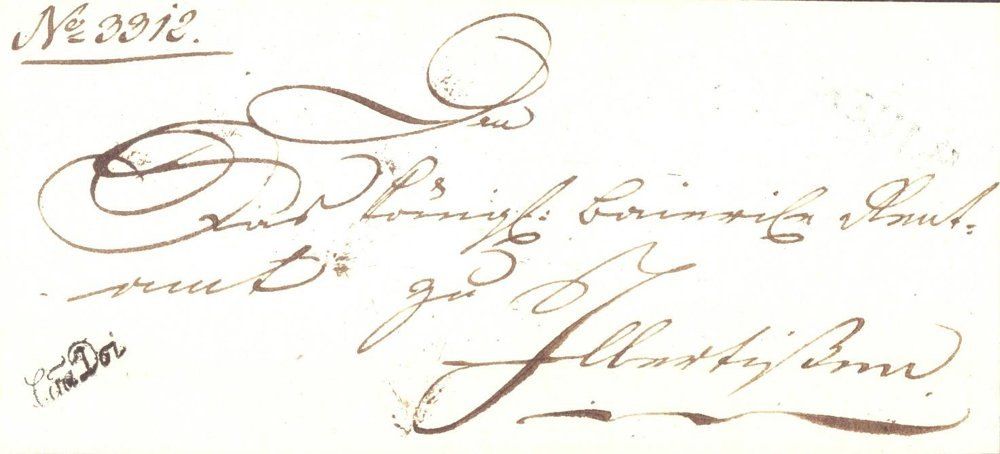
With mediatisation in 1802 Ulm lost its imperial freedom and passed to Bavaria. Letters now bear Bavarian rayon handstamps such as “R3 ULM”. The note “Caa Doi” (Causa Domini) marks postage-free mail sent in the name of the sovereign. In 1810 Ulm became part of Württemberg – the opposite bank remained Bavarian.
OCTOBER 1805
„Ulm est à nous“ – Napoleon before Ulm
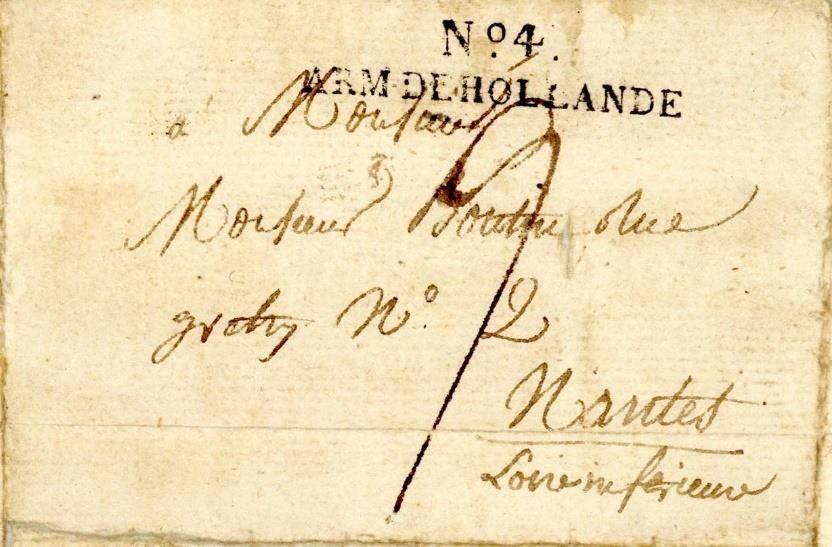
On 20 October 1805 the Austrian army under General Mack surrendered at Ulm. A day later the French engineer officer Vincent-Yves Boutin, who had reconnoitred Ulm’s fortifications, wrote to Nantes: “Ulm is ours.” The letter went through French Field Post No. 4 with the handstamp “ARM. DE HOLLANDE”, used for only a few months.
1810–1914
Fortress, industry and Minster spire
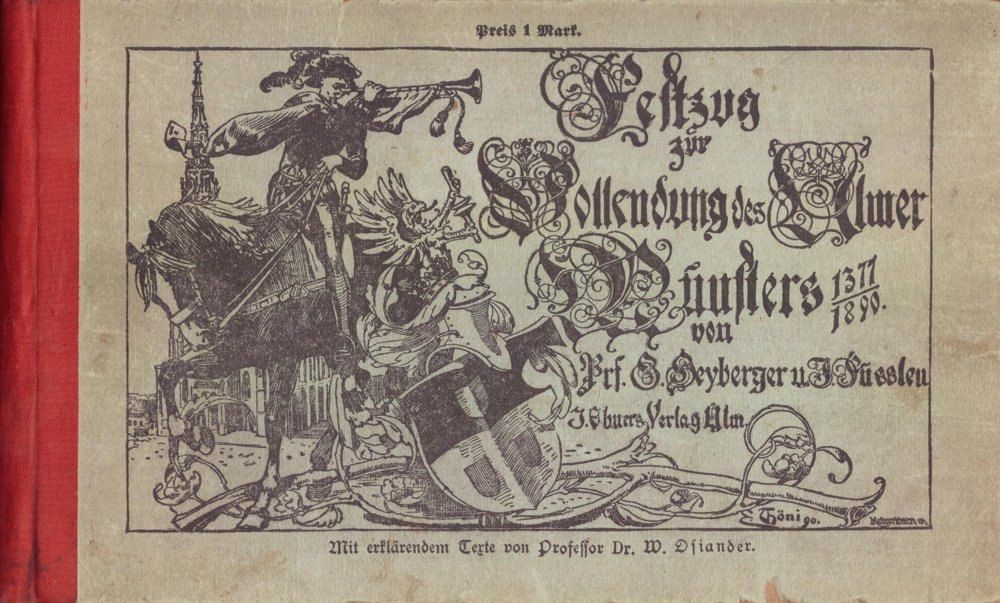
With the Federal Fortress, firms such as Magirus and Wieland and the railway, Ulm grew into a modern city in the 19th century. The high point was the completion of the Minster spire in 1890. This leporello was issued for the pageant: over 14 metres long when unfolded, and therefore hardly ever sent by post.
Texts and items: Paris Dimitriadis. On the Boutin letter in detail: Paris Dimitriadis, „Napoleon’s Spy: Vincent-Yves Boutin and the Strategic Role of Intelligence in the 1805 Ulm Campaign“, The London Philatelist, May 2025.
How the tram ran through old Ulm and across to Neu-Ulm is shown in our guide The tramway of Ulm and Neu-Ulm on old picture postcards →
The Minster
Its main tower, completed in 1890, is 161.53 m high – the tallest church tower in the world and the landmark on countless cards, often with the Danube and the skyline.
Town hall and market square
The painted town hall with its market fountain, outside staircase and astronomical clock is among the most frequent views.
Danube banks, Metzgerturm and fishermen’s quarter
City wall, the Metzgerturm tower, the tanners’ houses on the river Blau and the Danube bridges show old Ulm by the water.
Ulm characters
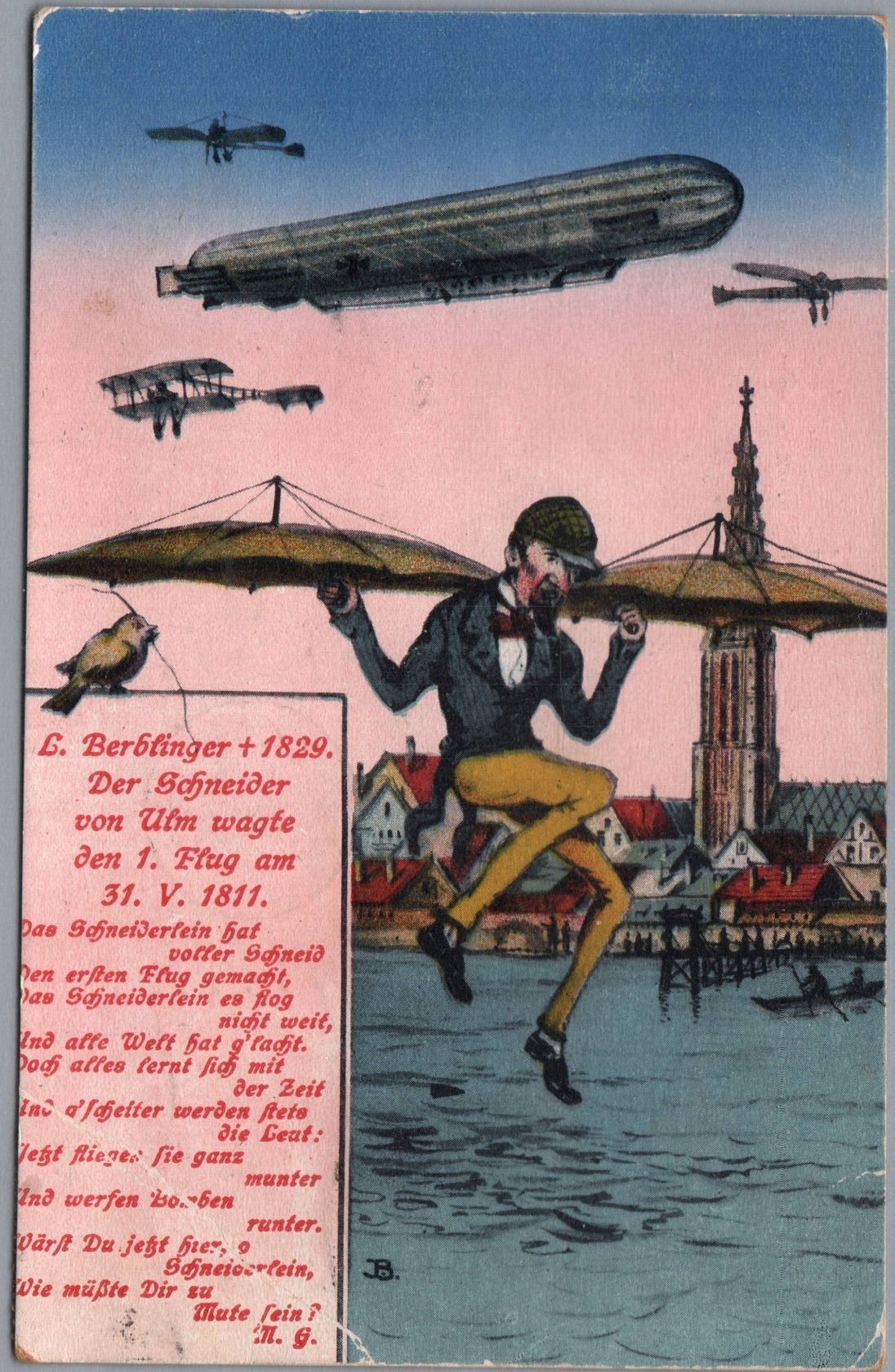
The Tailor of Ulm, Albrecht Berblinger, with his attempted flight in 1811, the Ulm Sparrow and dialect cards such as “Gruss aus Ulm”.
Station and main post office
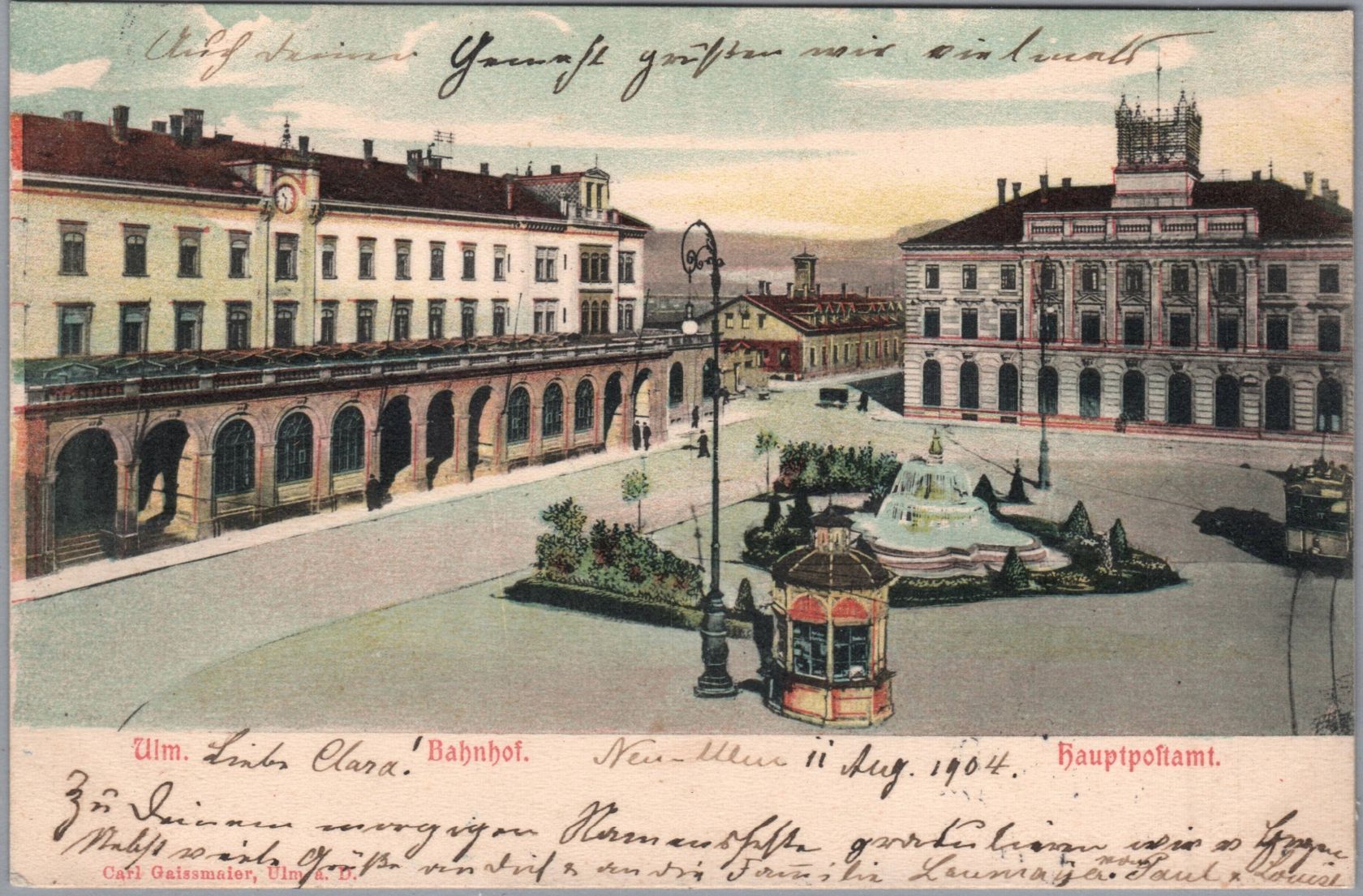
The station square and main post office around 1900 – popular with collectors of transport and postal motifs.
Festivals, districts and surroundings
The Ulm fair and folk festival, the fishermen’s jousting, plus Söflingen, Wiblingen and Neu-Ulm – cards of smaller places are often scarcer.
Browse our shop
Every card and every cover in our shop is described and pictured individually – with motif, publisher, postmark and route.
Postcards from Ulm → · Cards and covers from Neu-Ulm → · Glossary →
Old cards or covers from Ulm and the surrounding area to sell?
We buy picture postcards, covers and complete local collections – the first assessment is free and without obligation.
sammlershop-tk@gmx.net · Phone & WhatsApp +49 176 63156585 (Mon–Fri 10 am–6 pm)