GUIDE · ULM · NEU-ULM
From its opening in 1897 to its destruction in the Second World War: a tram ride through old Ulm and across to Neu-Ulm – told through historic picture postcards.
By Günter Thumerer and Paris Dimitriadis
Trams are not all that common on old picture postcards of Ulm and Neu-Ulm. Most cards show the main hubs – the station square or the Minster square, where several lines crossed until the Second World War. Quieter sections of the route are rarely pictured, and much of what the cards show was lost in the bombing of 1944. That is exactly why these cards tell us so much about the city, its traffic and its architecture.
In the mid-19th century Ulm became an important railway hub – seven lines started here. The Berlin manufacturer Wilhelm Emmer proposed creating a fast means of transport within the city as well, for residents, travellers and merchants: a tramway. The Ulm tramway was formally opened on 15 May 1897, making it one of the older ones in Germany.
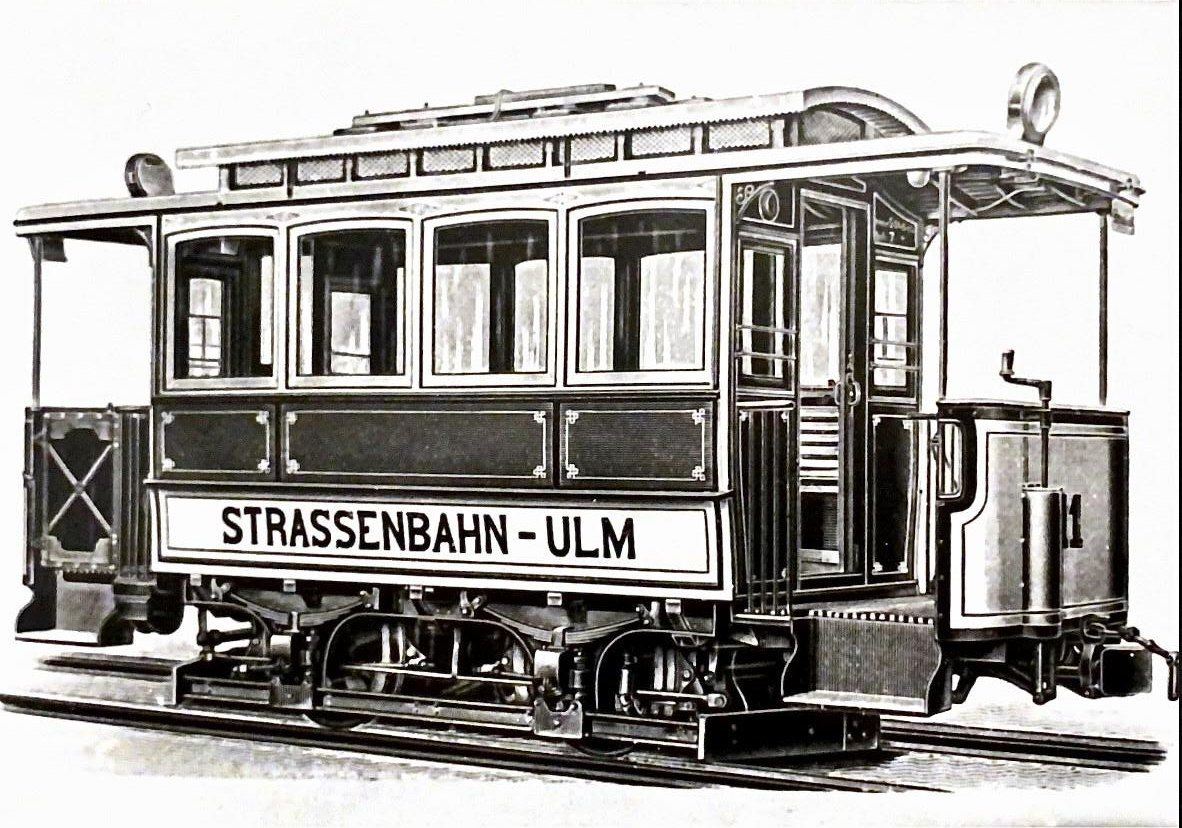
This is what the first vehicles – known as motor cars – looked like.
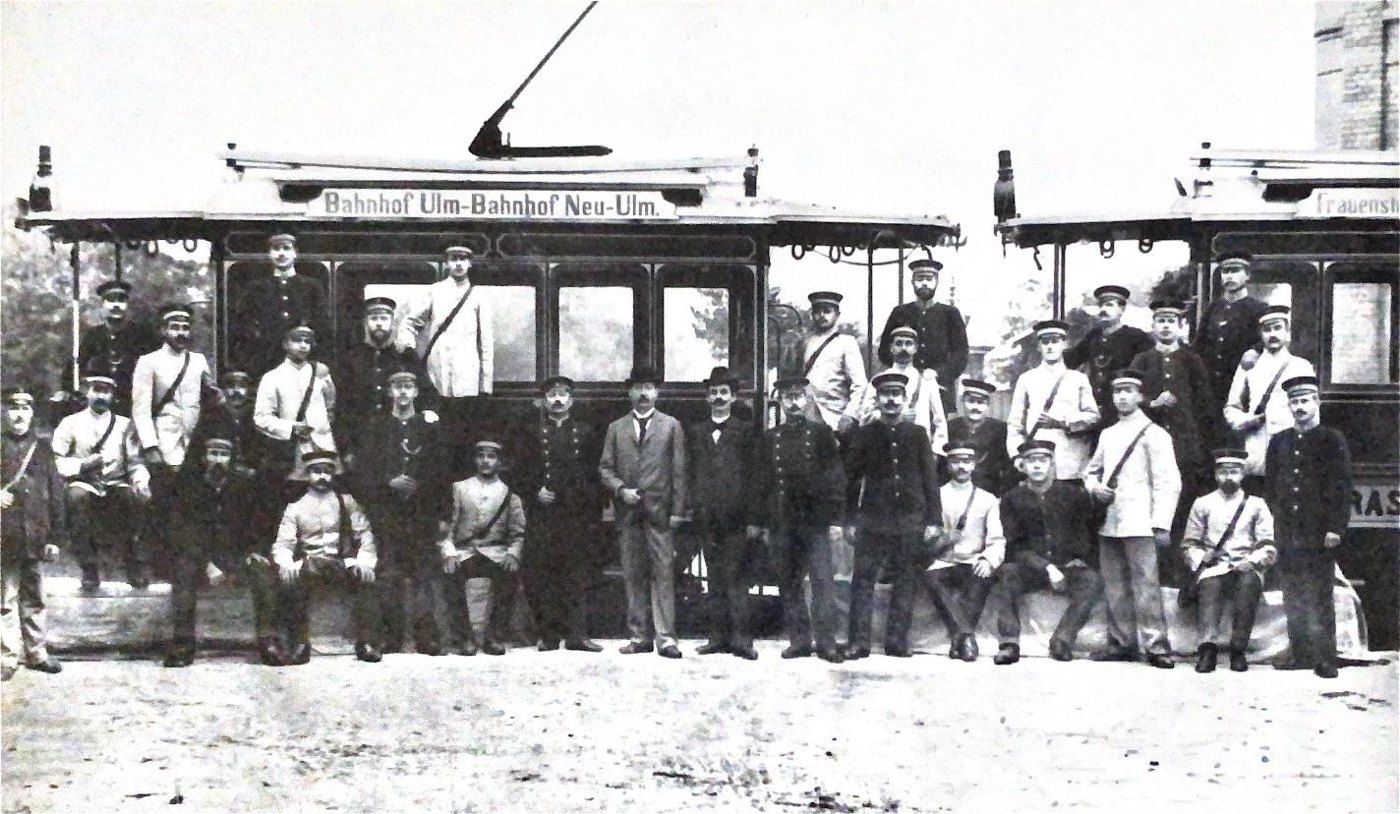
The formal opening on 15 May 1897: vehicle, staff and management.
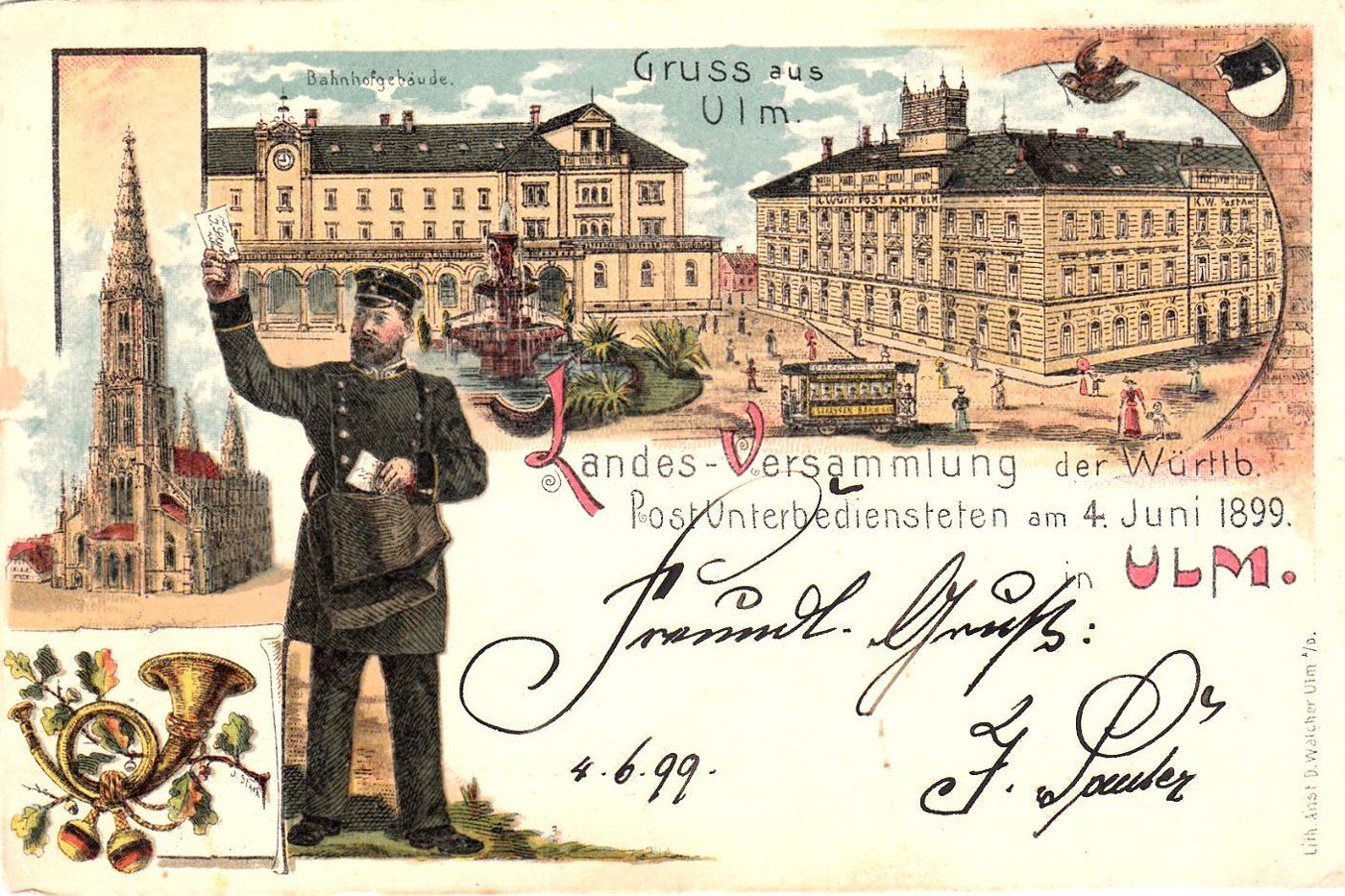
One of the earliest picture postcards showing a tram on the station square. Behind the fountain the station building, on the right the main post office.
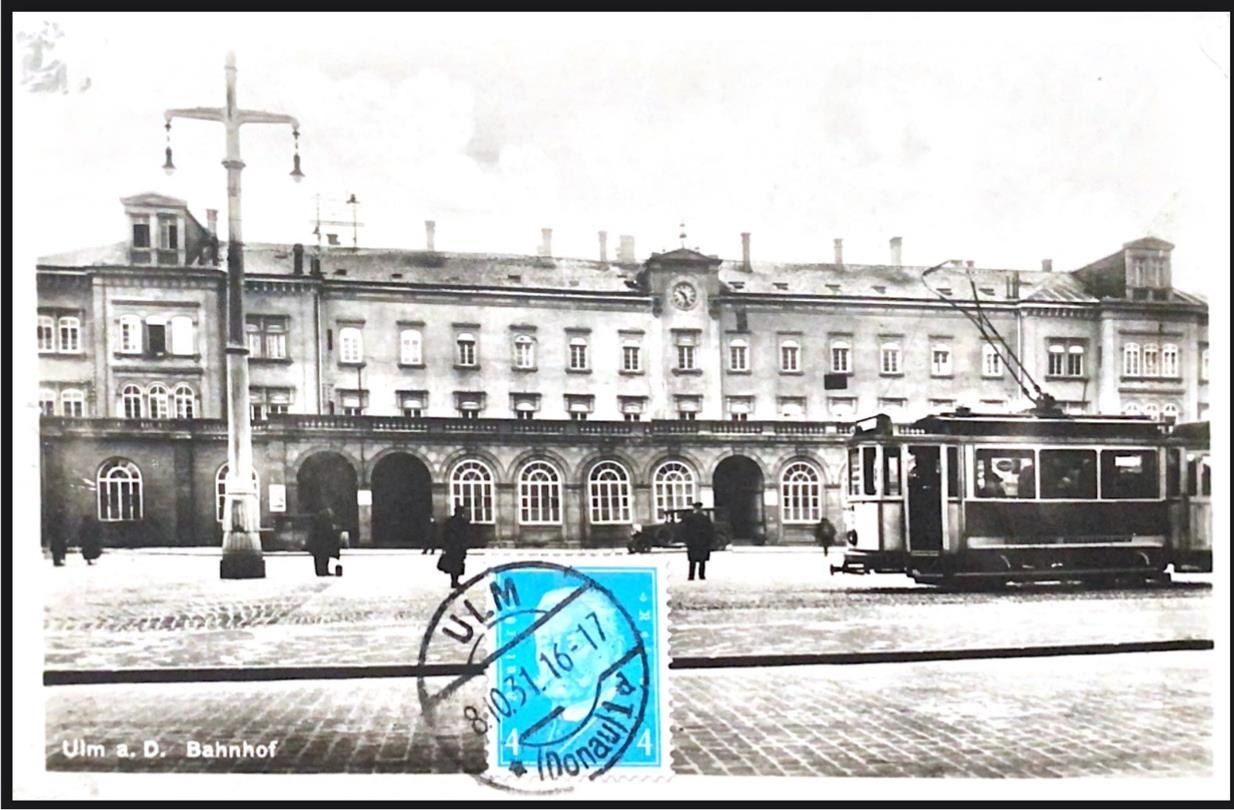
The old main station with a tram, 1931. The car has an enclosed driver’s cab – so it is not one of the first motor cars.
The ring line of 1897 grew, after a reorganisation in 1904 and the line to Neu-Ulm, into a network of four lines. In 1900 the Platzgasse line from the Minster square to the Stuttgart Gate was added, in 1906 the line to Söflingen, which was extended along Olgastraße to the Friedrichsau in 1927. From 1928 line 4 linked the Kuhberg with the hospital on the Safranberg. In 1905 the tramway and the power station passed into municipal ownership. The most important hub was the Minster square.
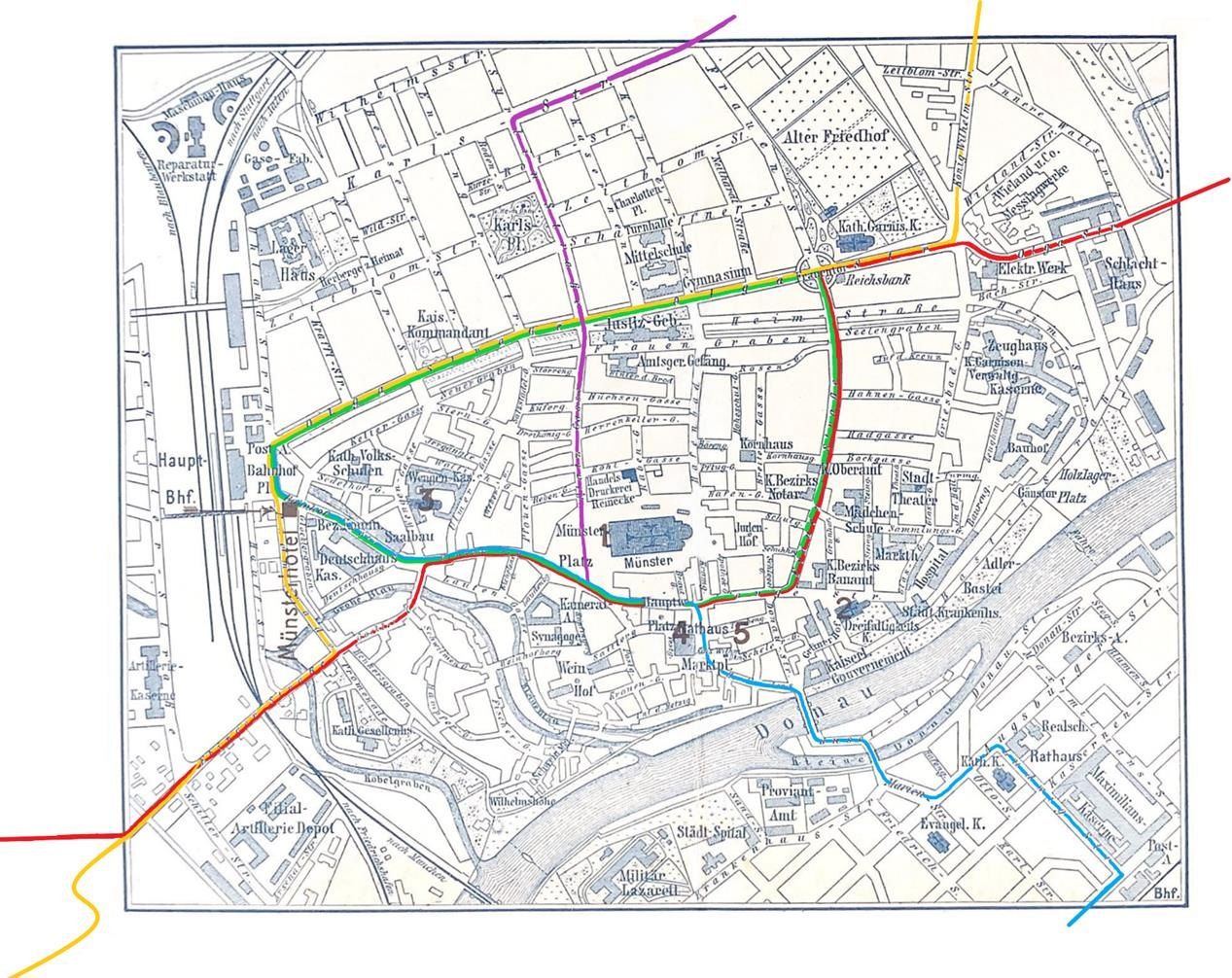
The network as numbered from 1928 and in operation until 1939: line 1 red, line 2 blue, line 3 violet, line 4 yellow, ring line green. Drawing by Paris Dimitriadis.
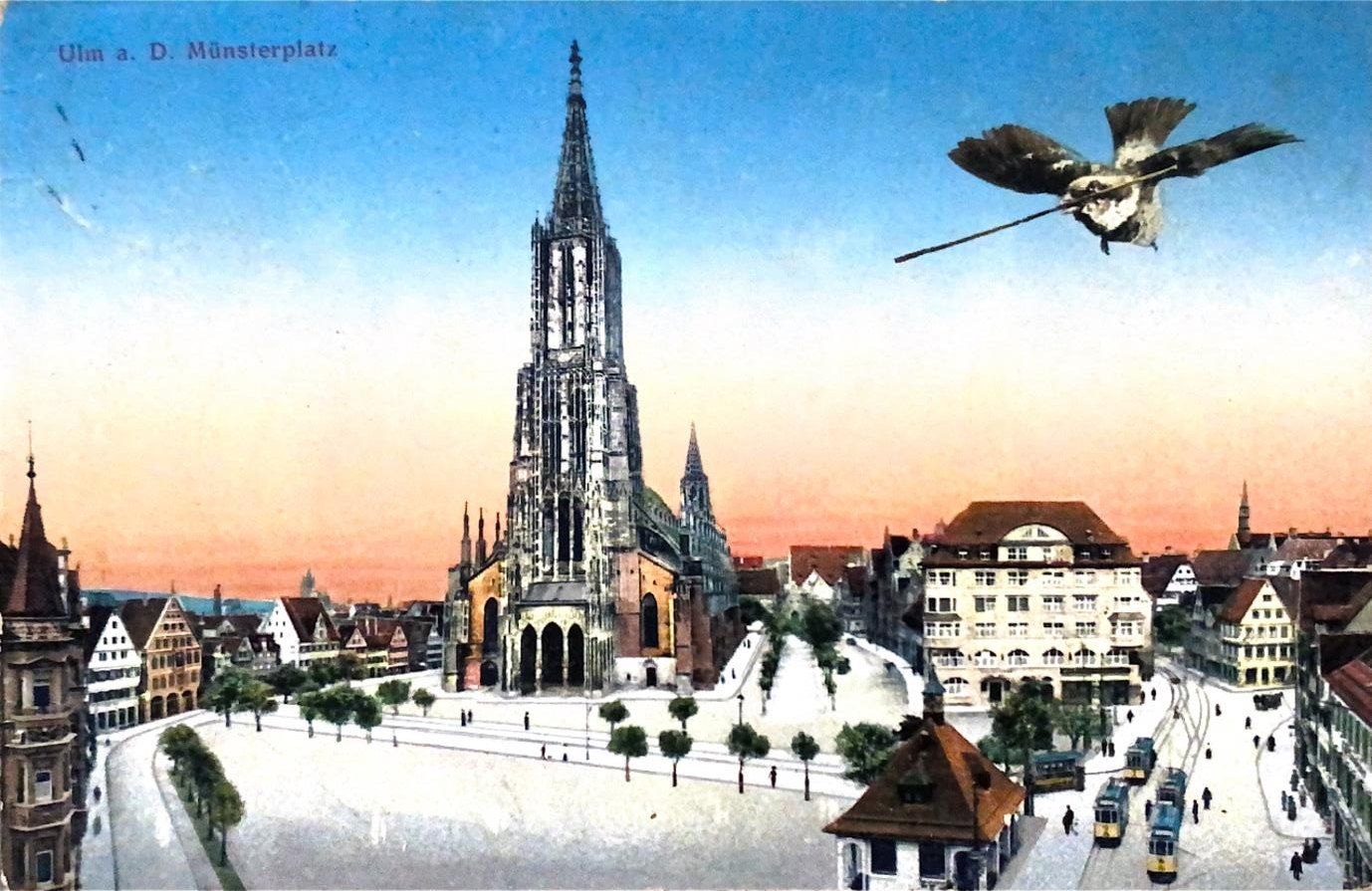
The Minster square at sunrise – several lines met here.
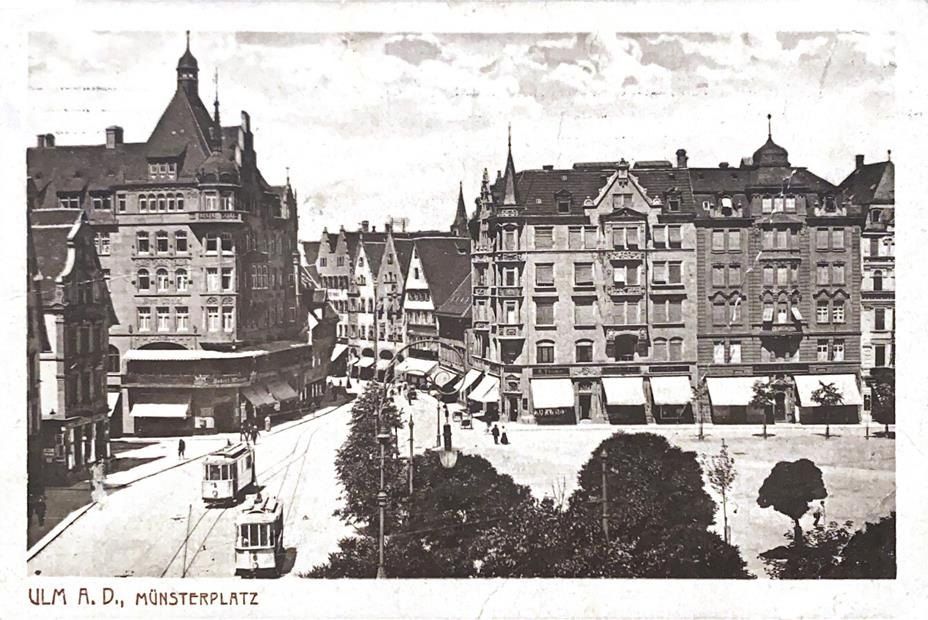
Ulm, Minster square with a tram.
On the station square
The centre of the station square was taken up by the monumental fountain, donated in 1898 by the Schwenk cement works. Around it a garden was laid out, together with a kiosk of cast iron and embossed sheet metal made in 1900 by Kullmann & Ling of Frankfurt am Main. On the left the post office occupied in 1855, opposite the “Russischer Hof” hotel. The building of 1870/71 next to the station hotel was the birthplace of Albert Einstein; behind it there was once a beer garden.
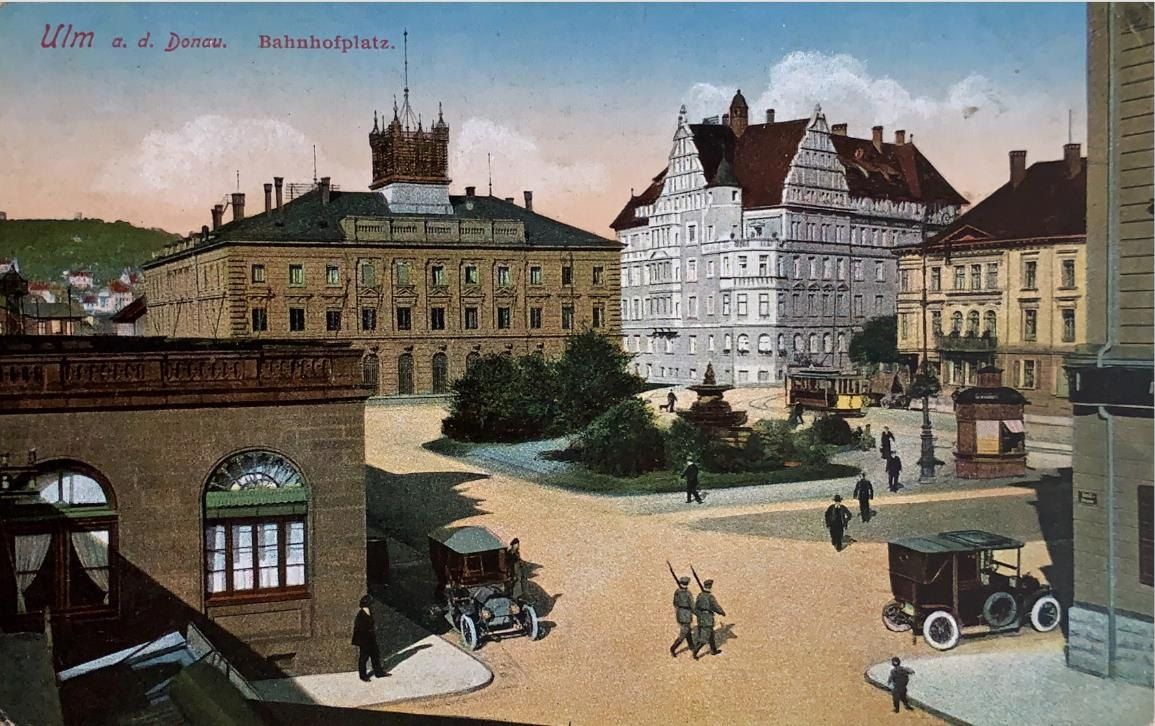
The station square: people arrived here from all over the world. On the right the tram turns into Olgastraße.
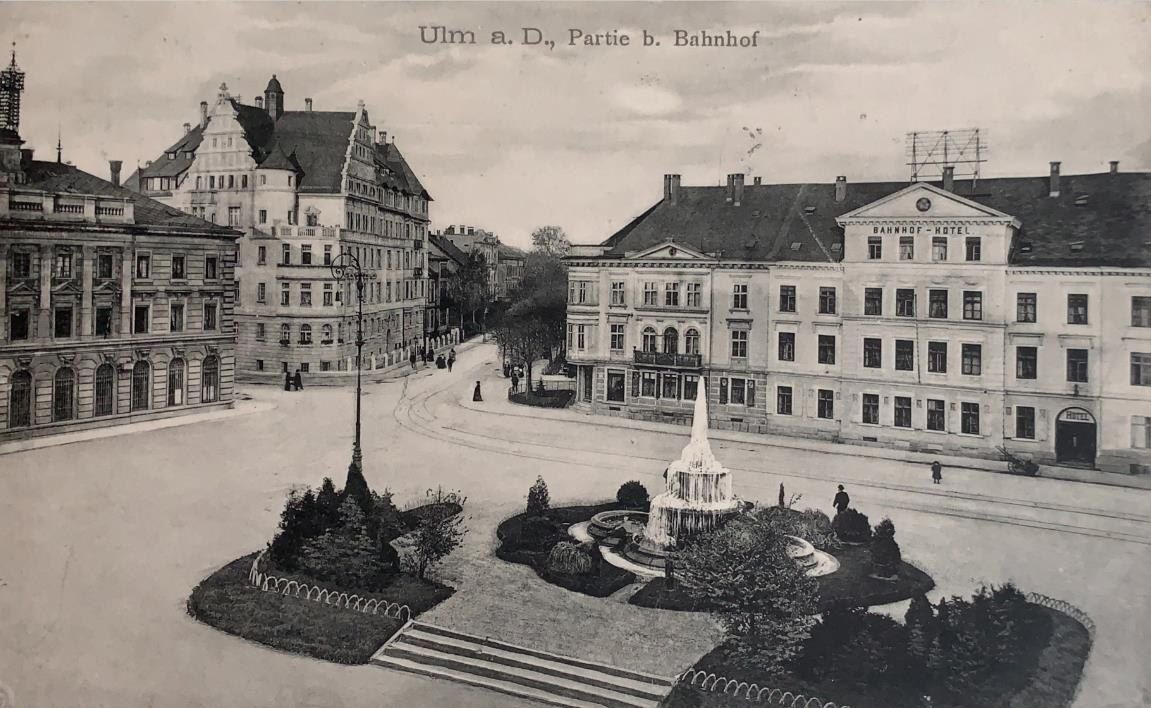
View from the station building onto the square with its fountain; in the background the first buildings of Olgastraße.
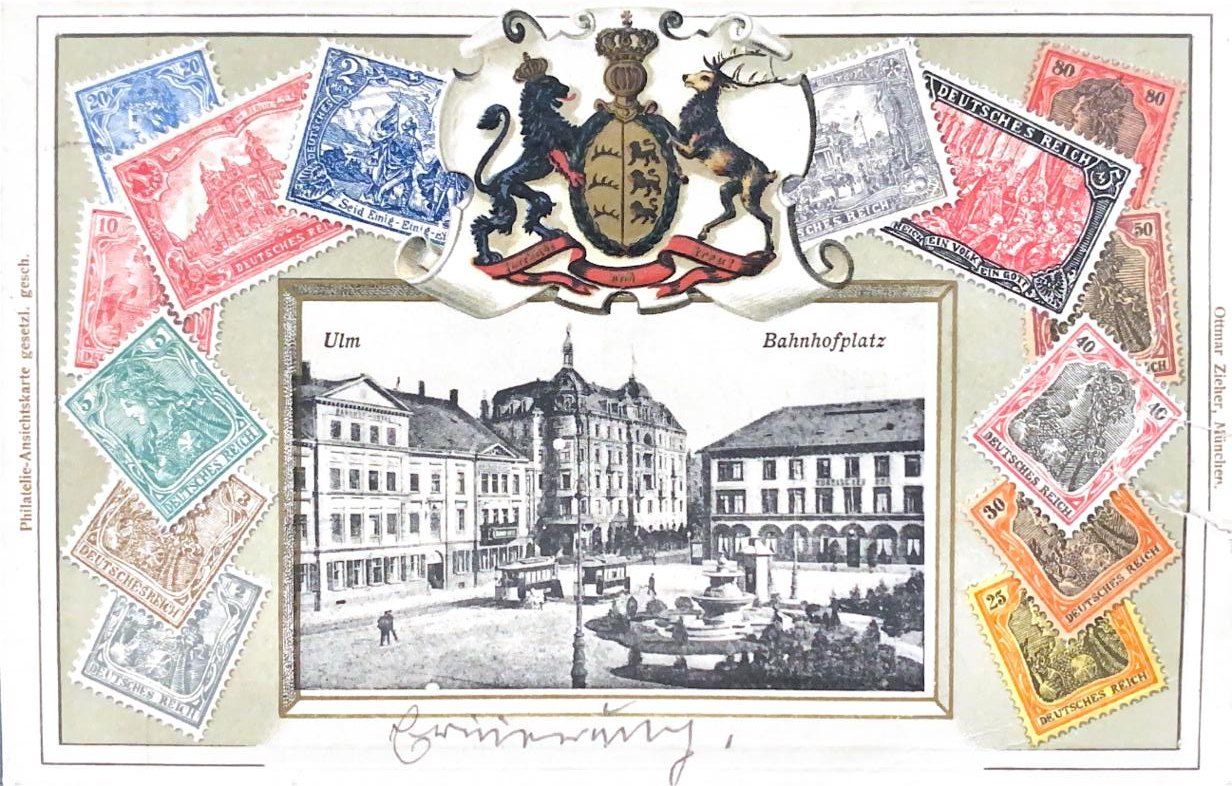
The station square framed by a splendid embossed card.
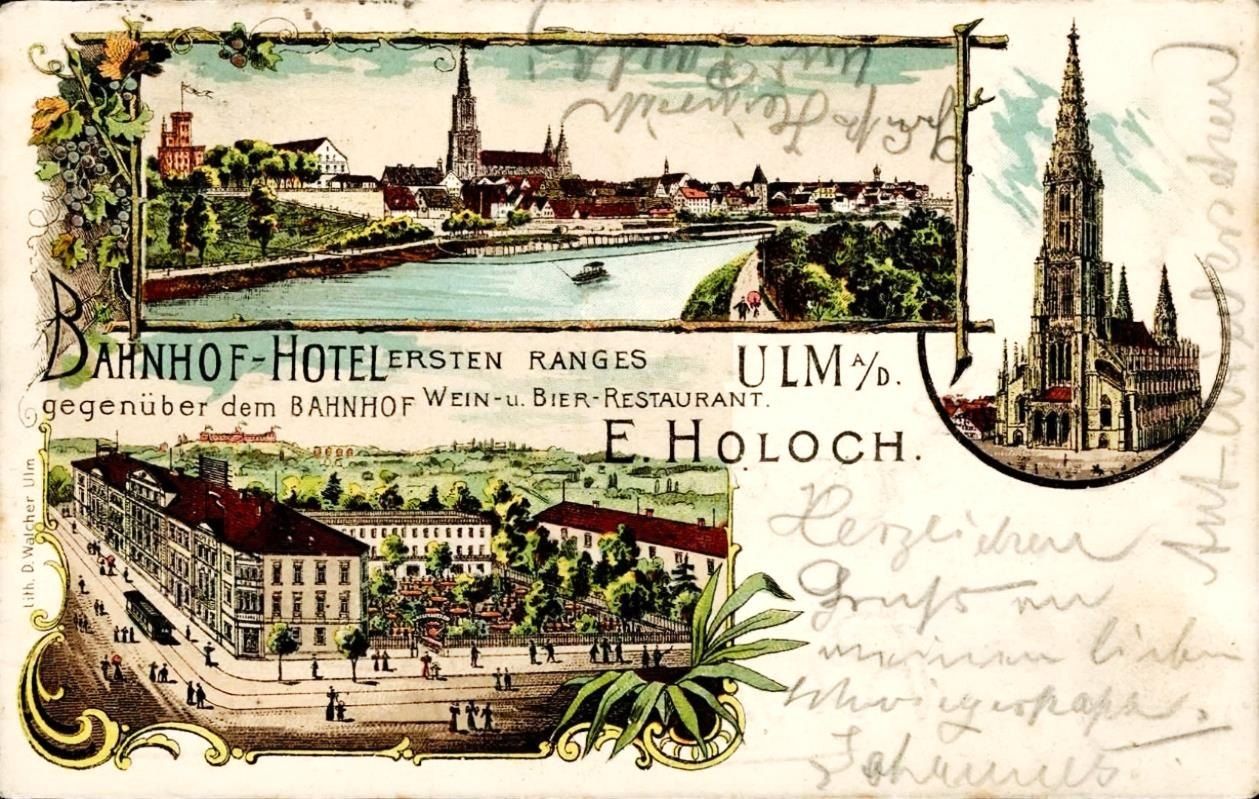
E. Holoch’s station hotel – directly behind it was a beer garden.
Hirschstraße and the Minster square
In Hirschstraße the tram passed close by shops, hotels, inns and the Saalbau concert hall built in 1894–1896. Half-timbering, Baroque, Rococo, Neo-Renaissance and Art Nouveau stood side by side. Apart from the Minster, almost everything the cards show was destroyed in 1944.
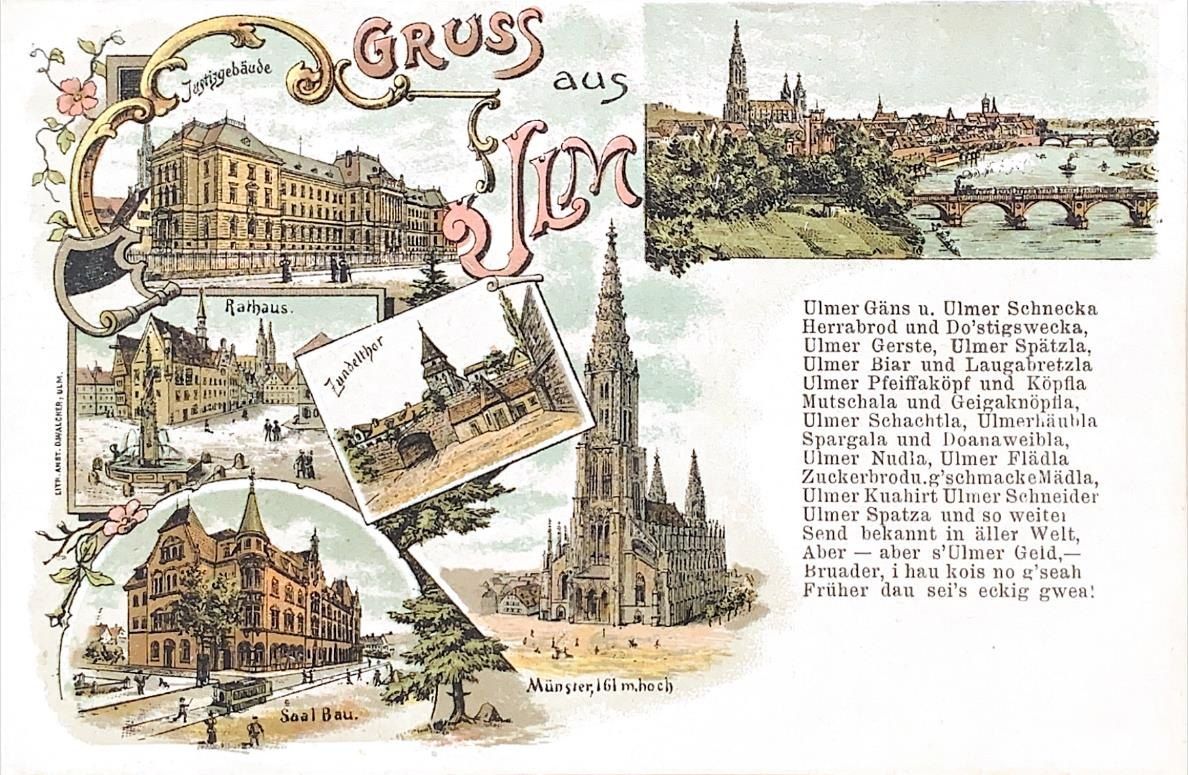
A common view – but rarely with this overprint: a poem in praise of Ulm delicacies.
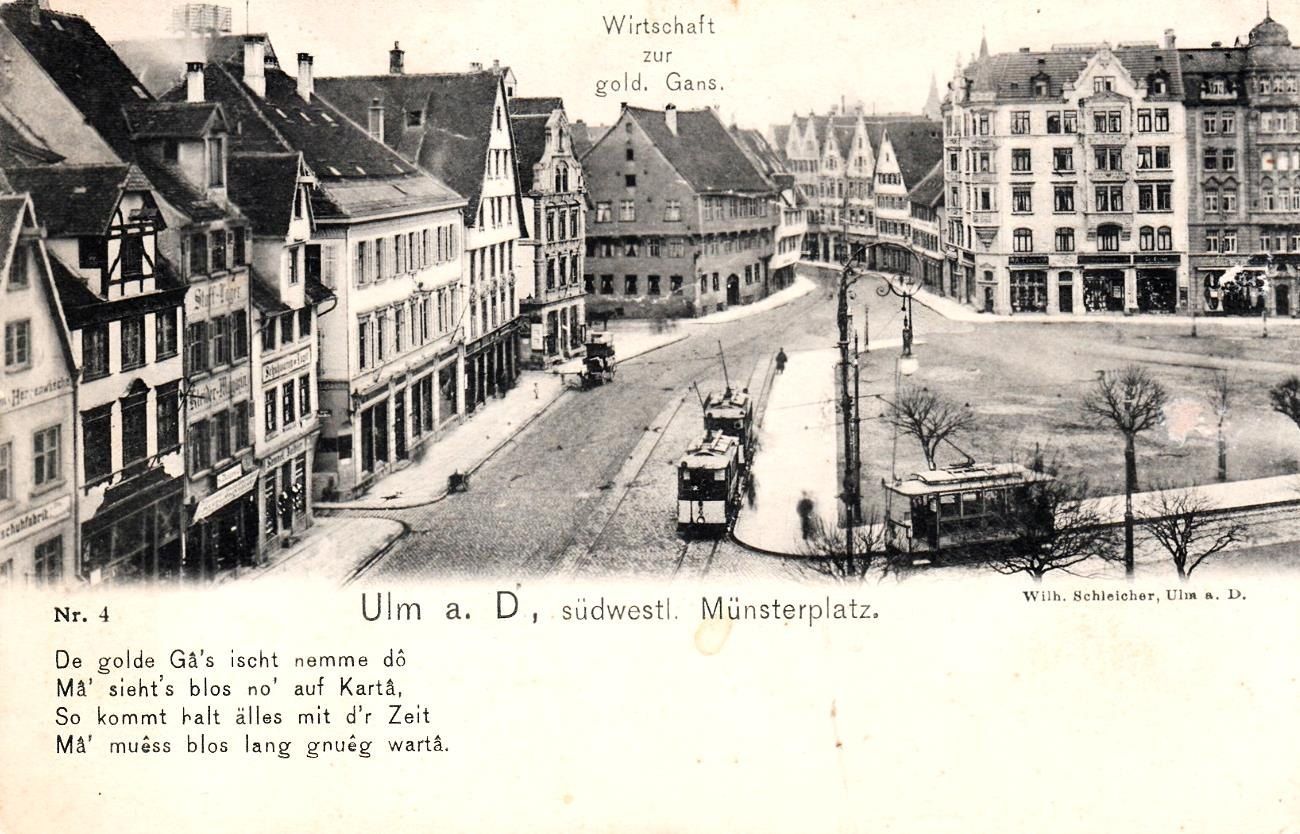
The south-west Minster square: the “Zur goldenen Gans” inn gave way to the commercial building with Minster hotel of the jeweller Robert Merath.
Olgastraße
Olgastraße was laid out from 1808 as a promenade along the old town moat, where 17th-century bastions had stood. It had houses, shops, the law courts and the royal district office – and the first tracks of the Ulm tramway were laid here.
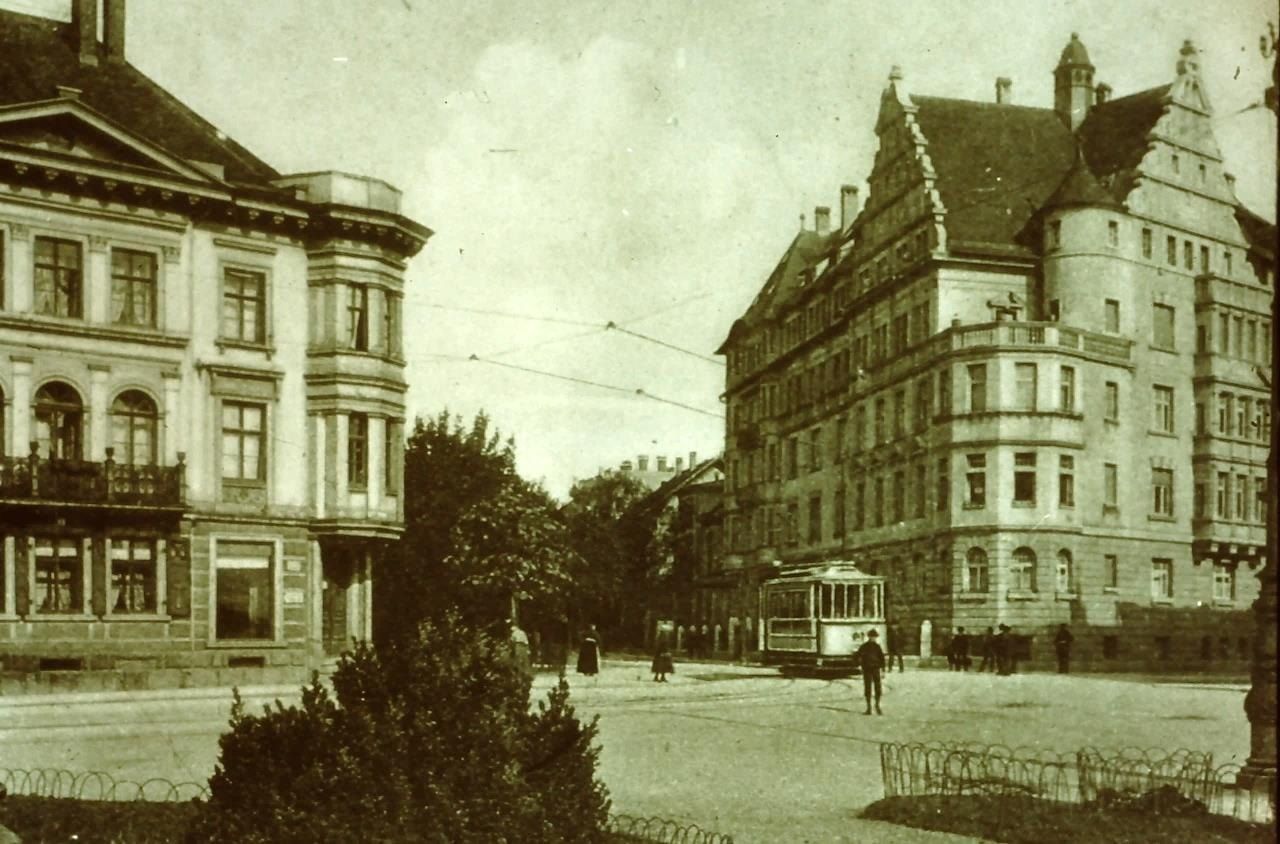
The tram in Olgastraße – a broad, green street where town and nature were in harmony.
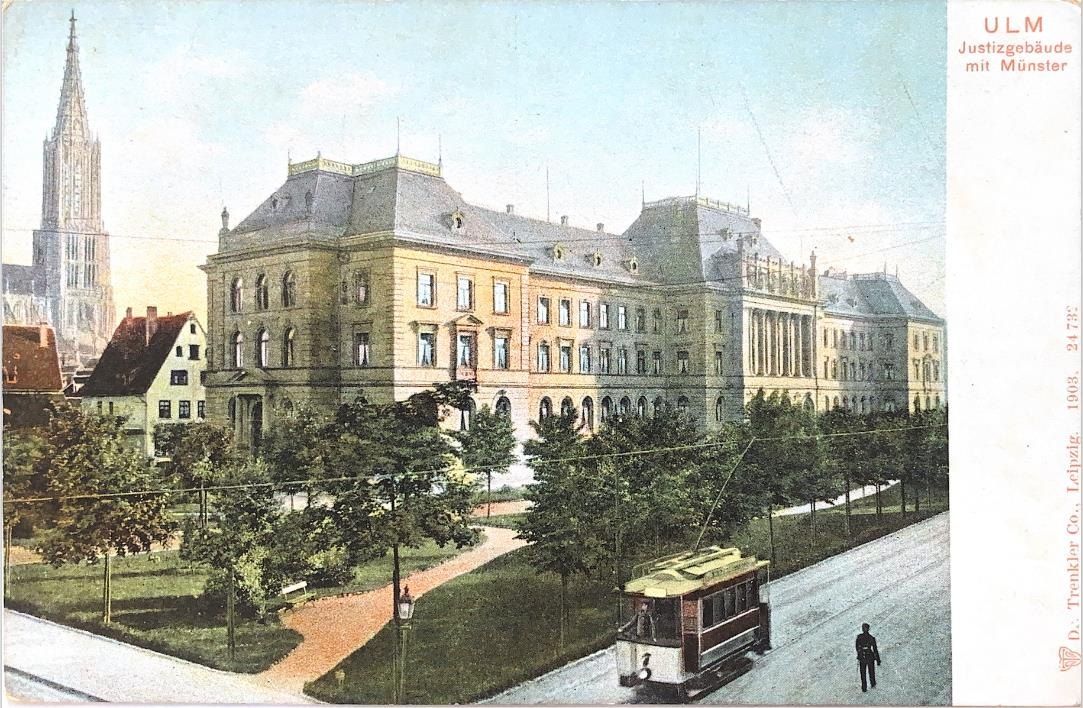
Car no. 7 of the ring line at the law courts, still with an open driver’s platform.
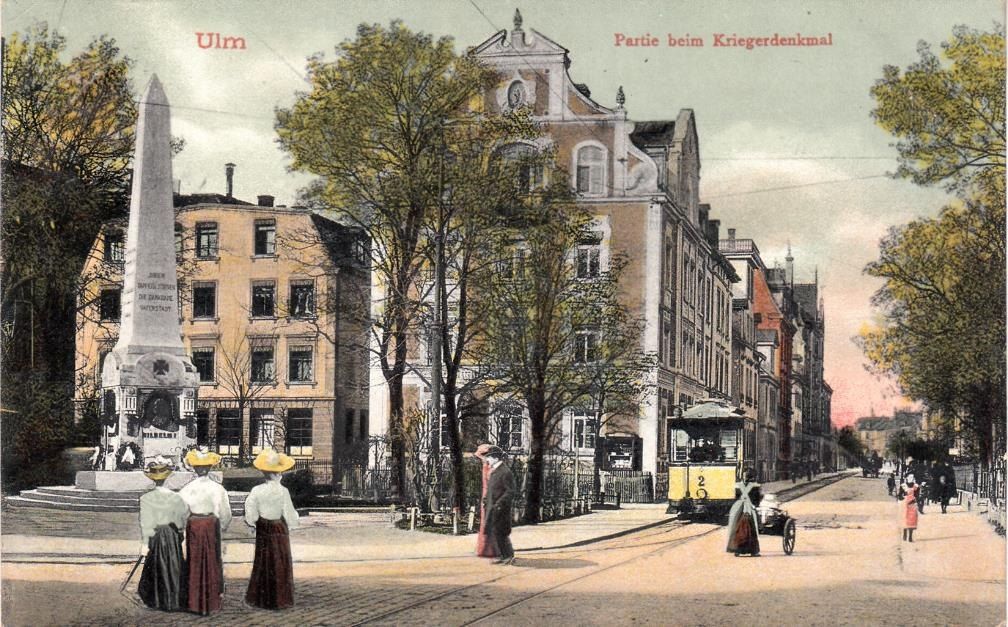
At the memorial to the fallen of 1870/71, corner of Olgastraße and Frauenstraße. Here the lines branched: left the ring line, straight on to the Friedrichsau.
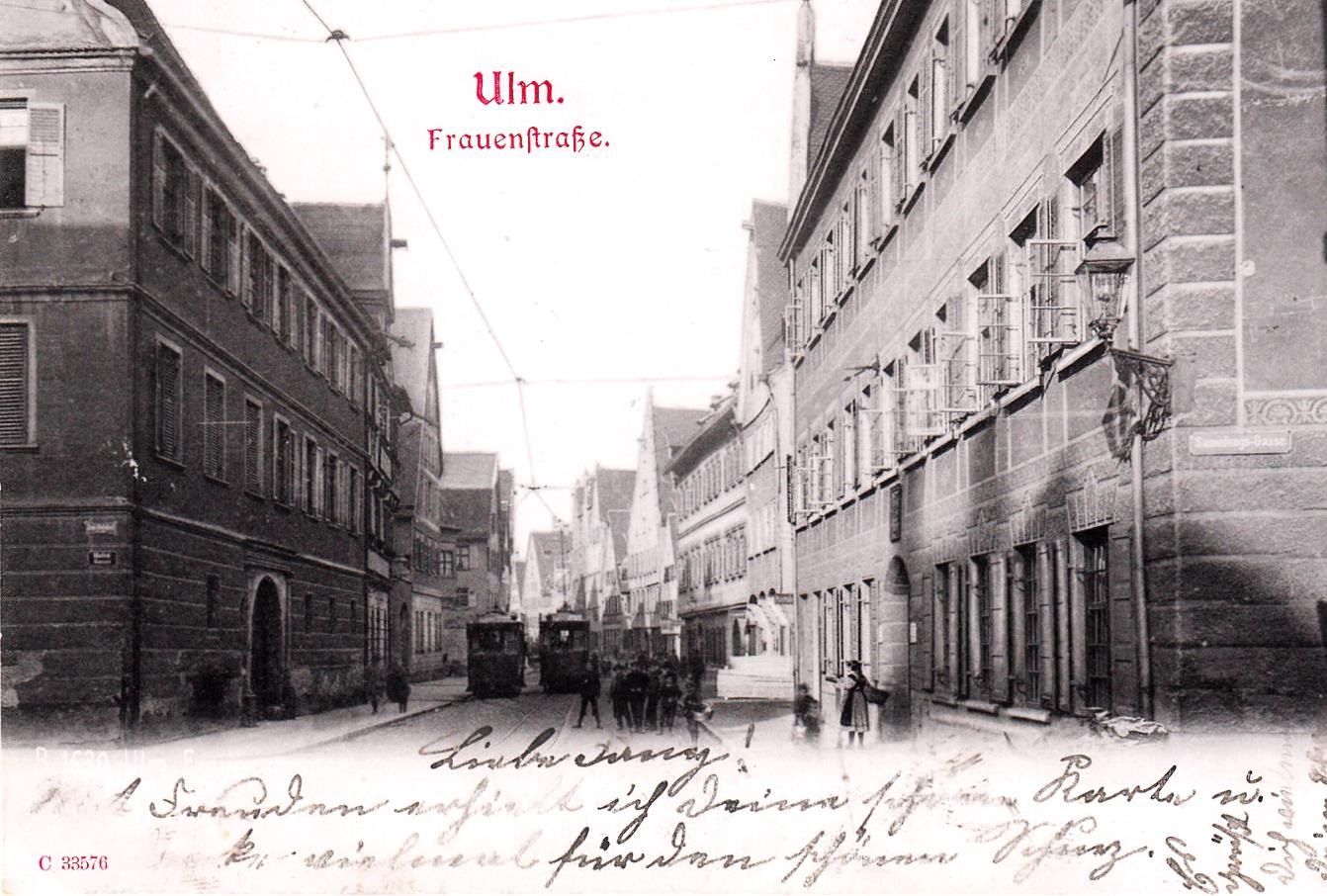
Frauenstraße with Renaissance buildings from the late 16th century.
Karlstraße and Söflingen
From Frauenstraße the trams went on to the Minster square or along Karlstraße. The line to Söflingen crossed the Zinglerbrücke – named in 1904 after Rudolf von Zingler, former governor of the Federal Fortress and honorary citizen of Ulm – and ran along Wagnerstraße to the village square of Söflingen.
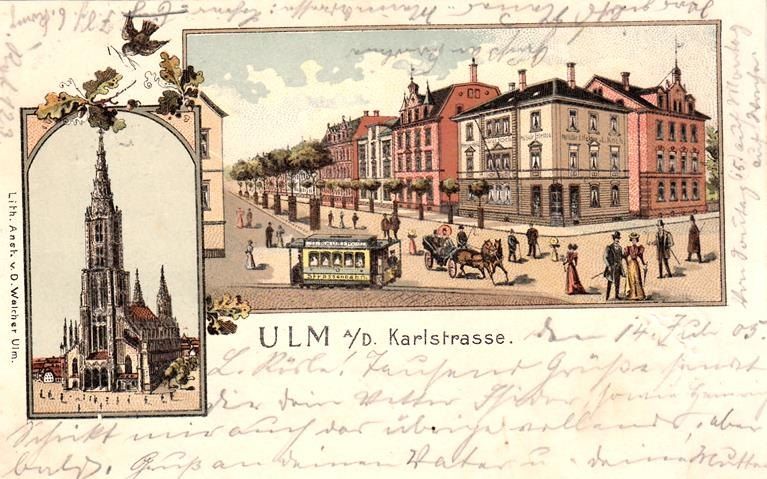
Ulm, Karlstraße – lithograph with tram, carriages and passers-by.
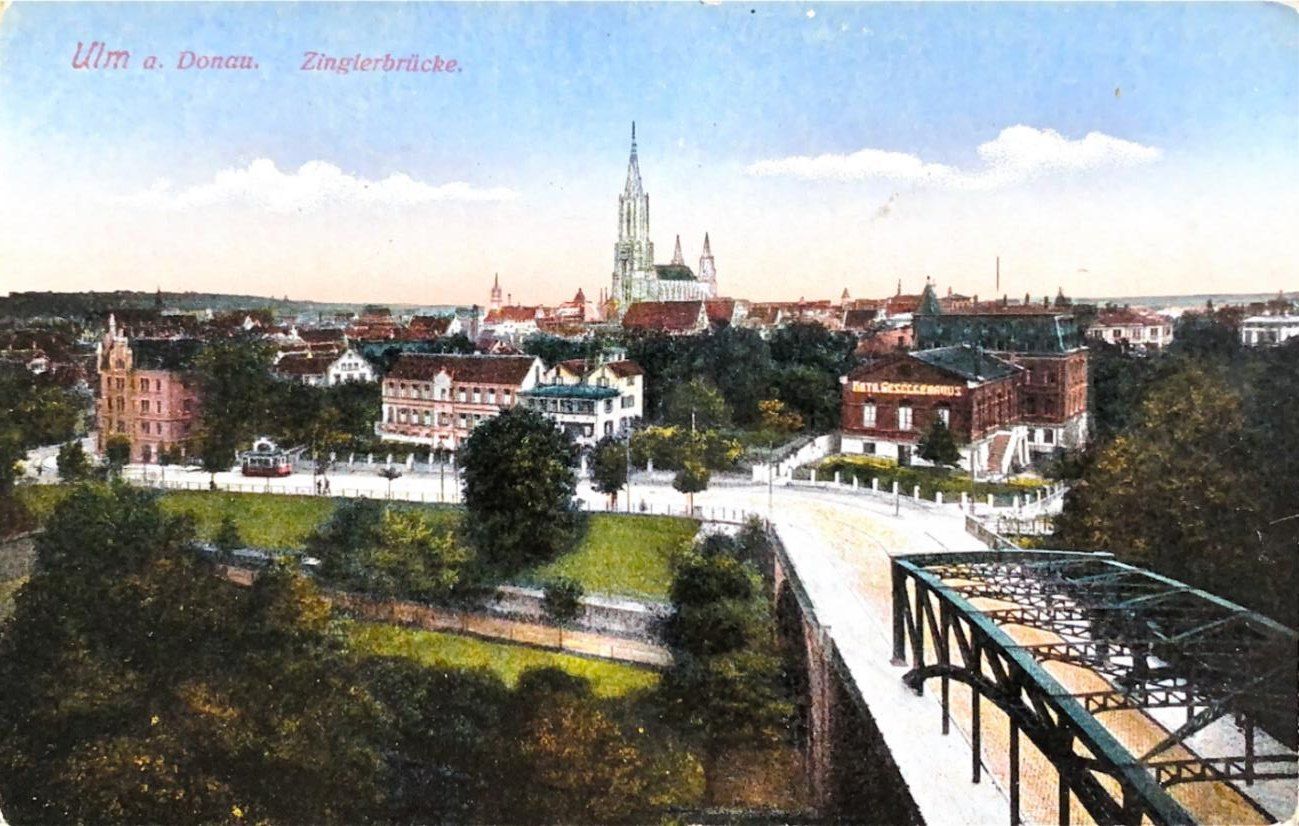
The Zinglerbrücke with a view of Ulm.
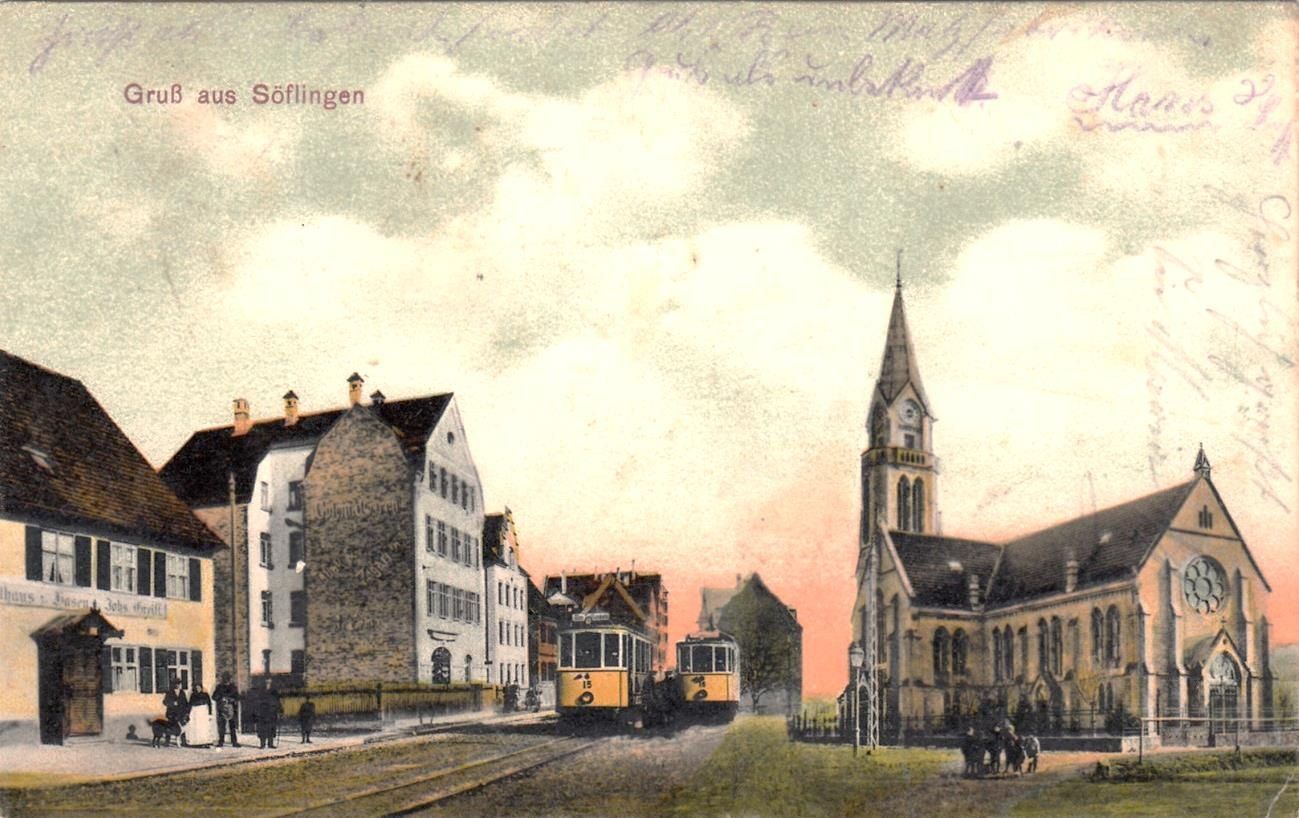
Greetings from Söflingen: two trams near the Christuskirche.
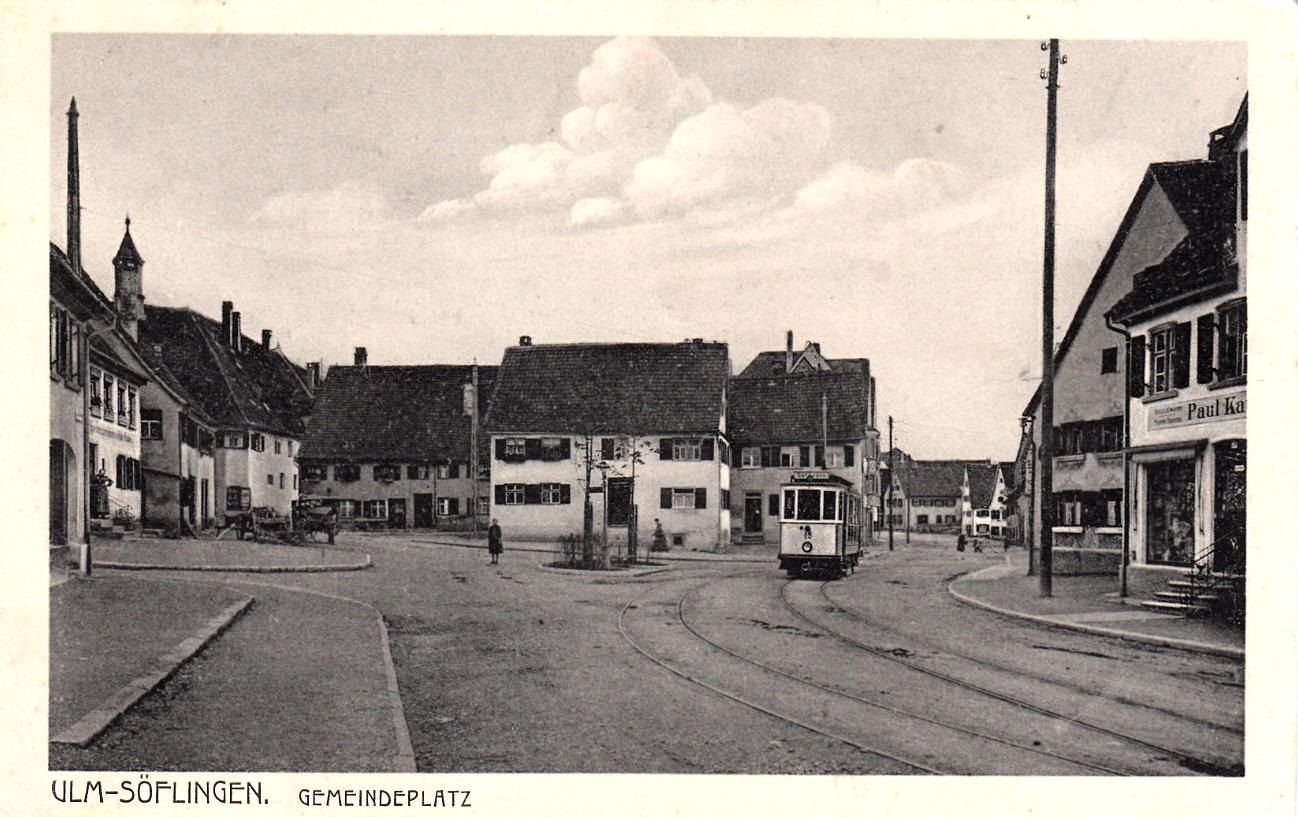
On the village square in Söflingen. Traffic was as light as on many cards only on Sundays at most.
Across the Danube to Neu-Ulm
Past the town hall – restored in 1905 from old documents – the route crossed the Herdbrücke to the island and the Marienbrücke into Bavarian Neu-Ulm. There the tram ran along Augsburger Straße, the dead-straight main axis of the town, to Neu-Ulm station. It thus linked two towns in two kingdoms.
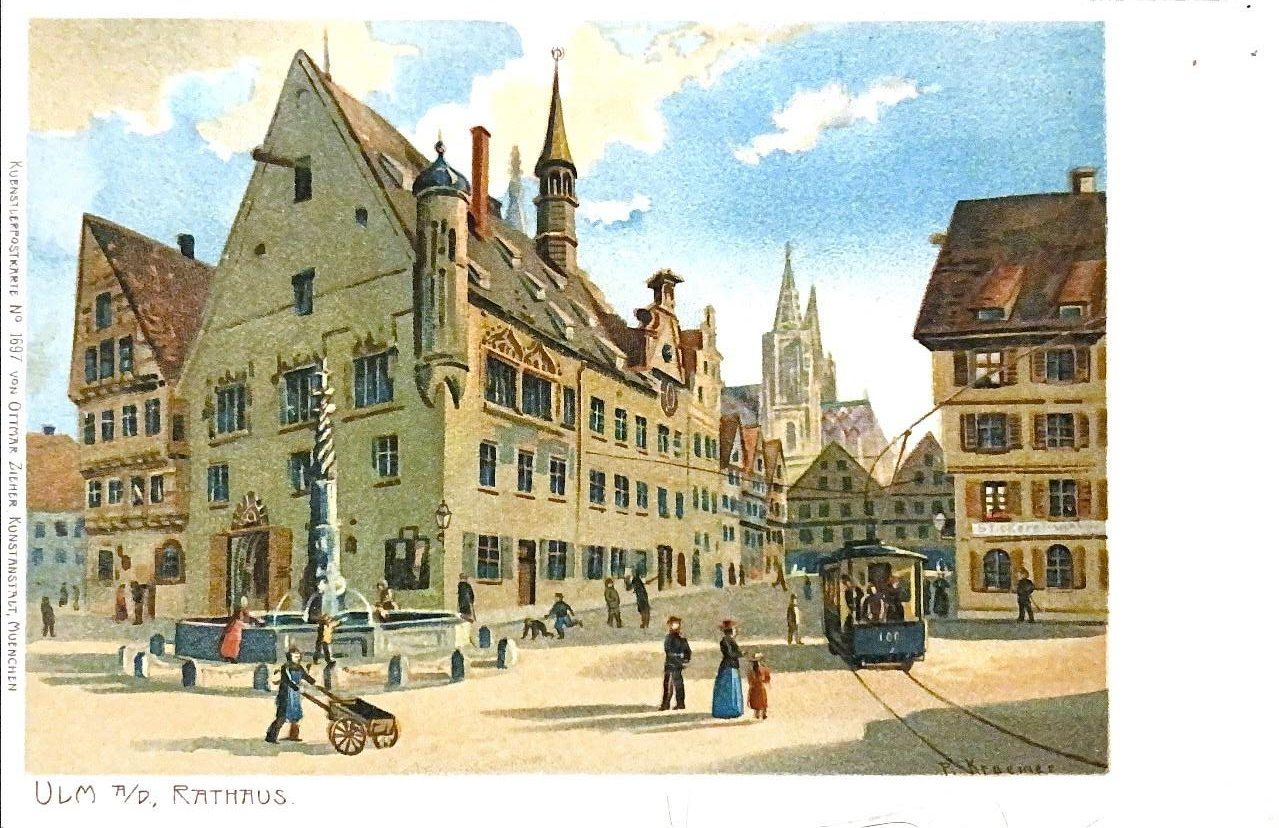
Ulm town hall with a tram.
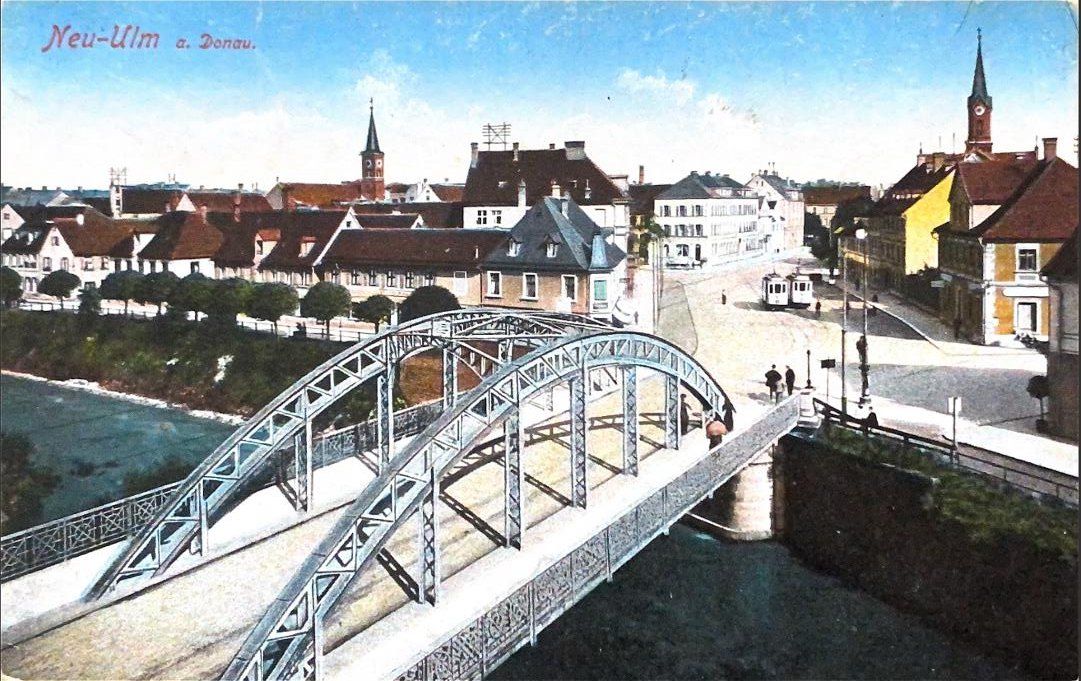
Neu-Ulm on the Danube: the bridge into Bavarian Neu-Ulm.
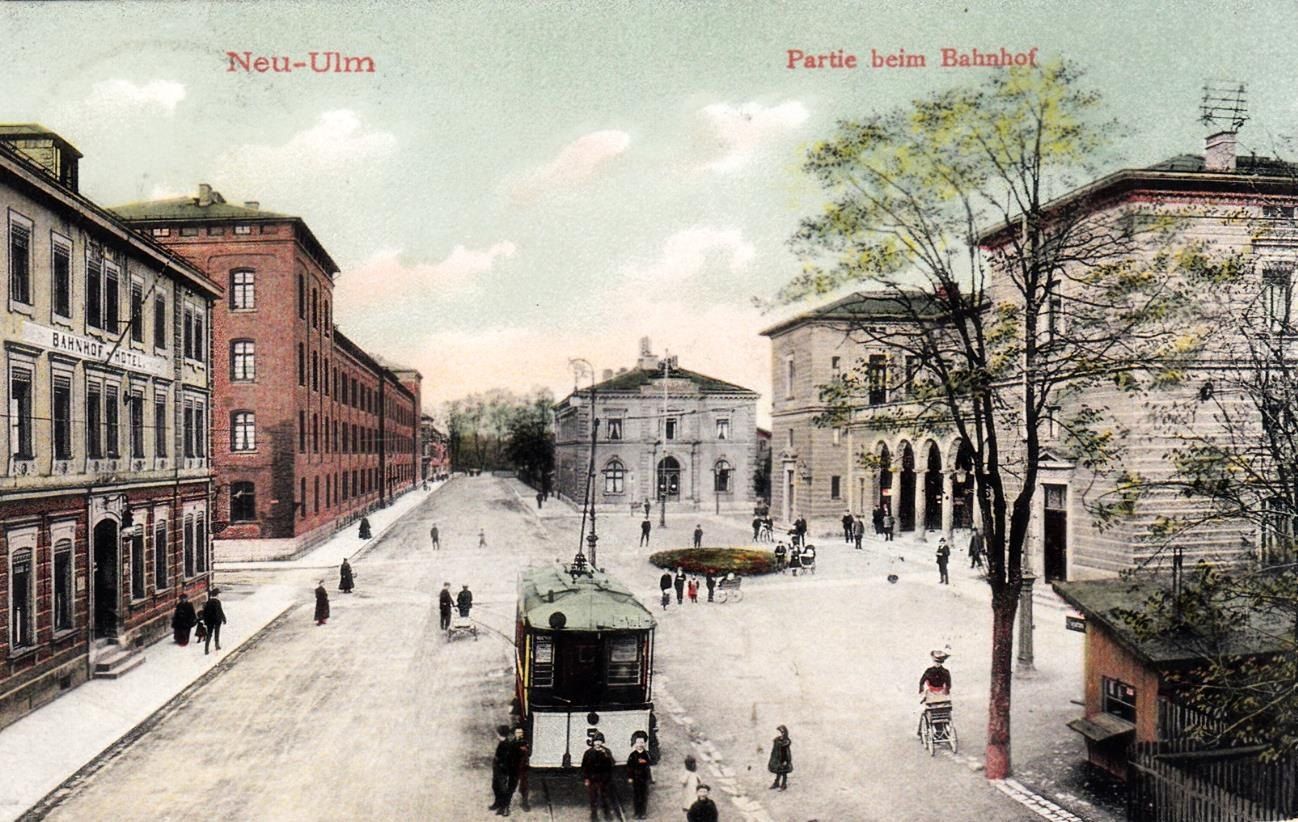
“Partie beim Bahnhof” in Neu-Ulm – meaning the old Neu-Ulm station on the right behind the tree.
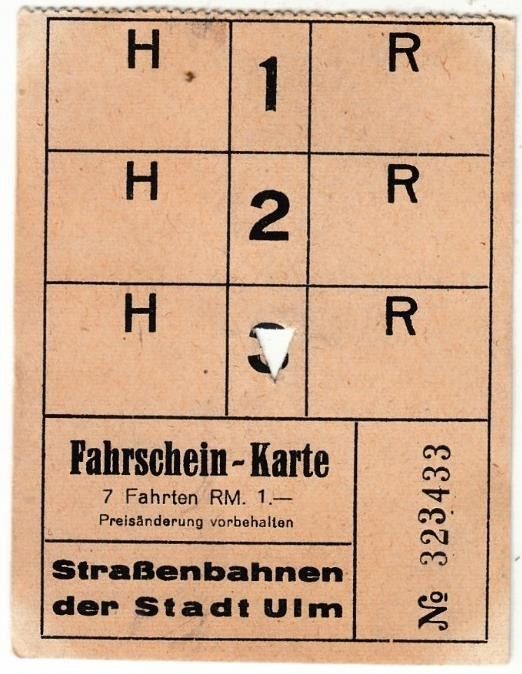
This is what tickets looked like some 95 years ago – there were single, day and multi-journey tickets.
Between June 1940 and April 1945 some 2,100 aircraft dropped around 310,000 bombs on Ulm and Neu-Ulm. In the heaviest raid, on 17 December 1944, 707 people died. More than 80 per cent of the old town was destroyed; the Minster survived as if by a miracle. The tramway was not spared either: the Herdbrücke over the Danube collapsed, leaving tracks hanging over the river. Many of the streets on the cards on this page no longer exist – the postcards are often the only pictures of them today.
Around 1900 humorous “future” cards were popular: Zeppelins and balloons float over Ulm, a suspension railway crosses the square, with trams and cars below. The artists were not entirely wrong – cars, trains and airships really did keep getting better.
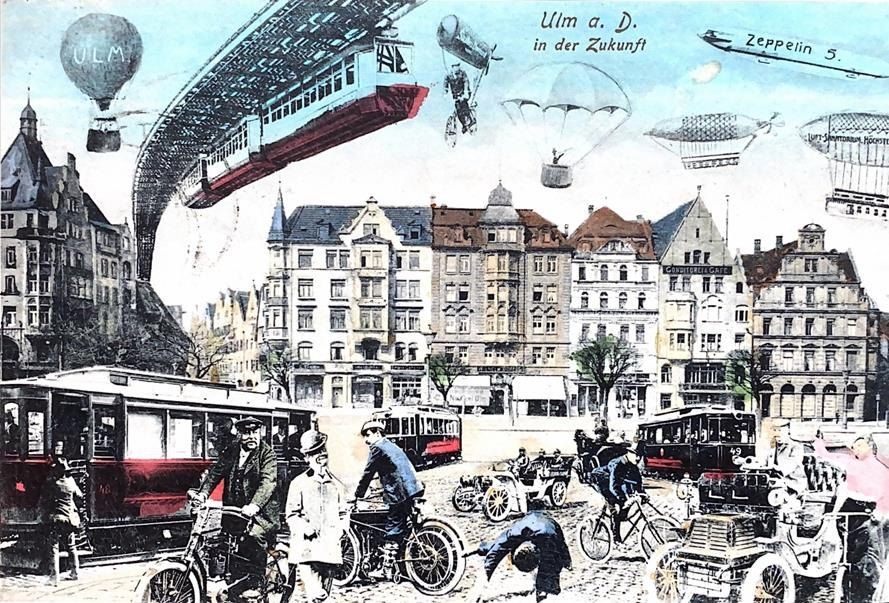
Ulm in the future: suspension railway, Zeppelins, balloons and trams.
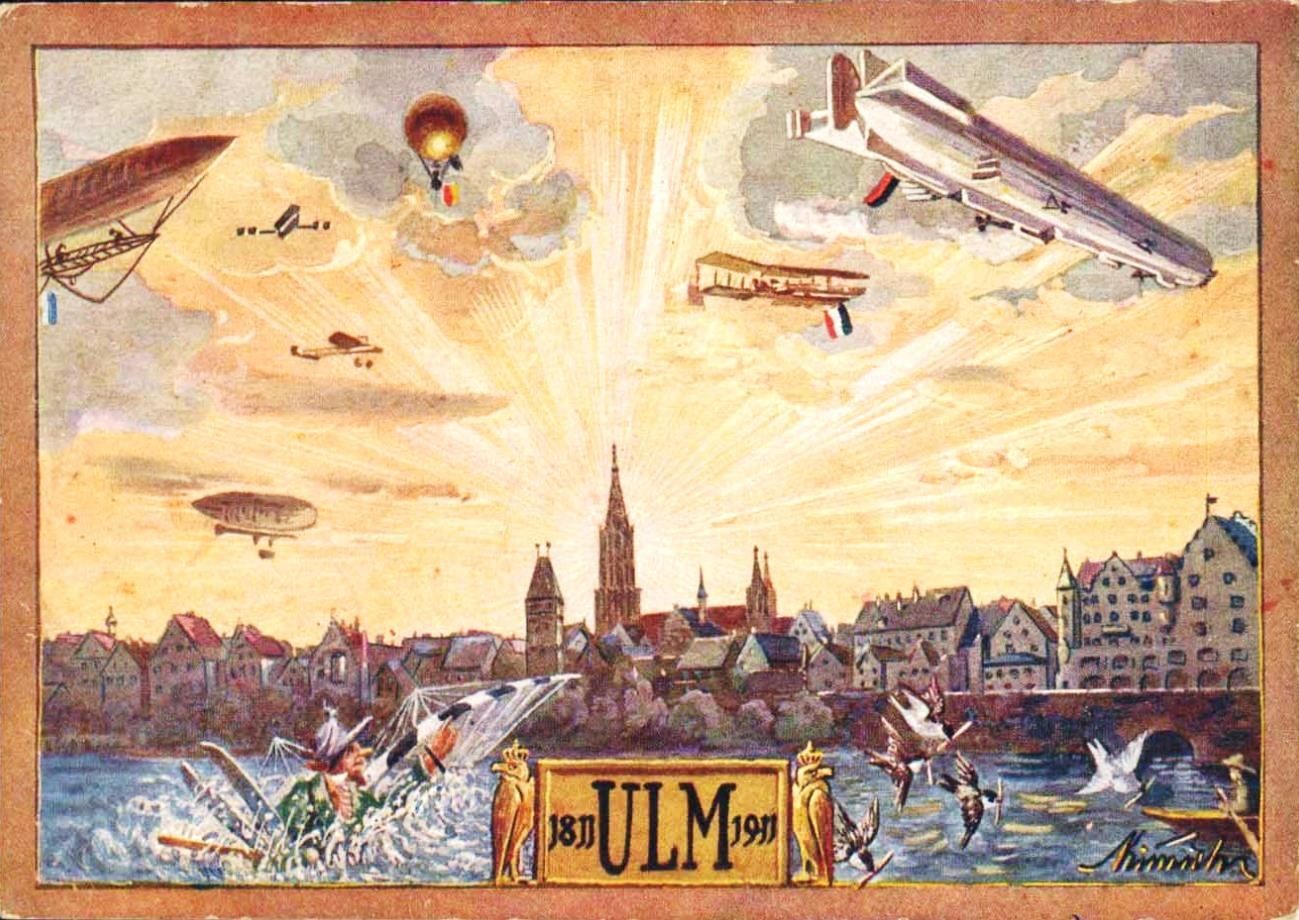
Not a vision of the future but a look back: a hundred years of aviation pioneers, 1811 to 1911.
Source and authors. Based on the exhibit “Die Ulmer Straßenbahn: Eine Geschichte mit Zukunft?” by Günter Thumerer († 2026) and Paris Dimitriadis, created through the joint work of the collectors of the Verein für Briefmarkenkunde Ulm/Neu-Ulm 1883 e.V.; cards from their collections.
Further reading: „Ulmer Bilder-Chronik“ (Karl Höhn Verlag); Helmut Pflüger, „Das alte Stadtbild“; Eberhard Neubronner, „Ulm in Trümmern“; Daniel Riechers, „100 Jahre Straßenbahn Ulm/Neu-Ulm“; „125 Jahre Straßenbahn in Ulm und Neu-Ulm“ (Nahverkehrsfreunde and SWU).
More on the city’s history: Ulm and Neu-Ulm on old picture postcards → · Ulm 1810–1914 on letters and postcards →
Old picture postcards from Ulm to sell?
We buy picture postcards, letters and entire local collections – the first assessment is free and without obligation.
Sell letters & picture postcards → · Ulm picture postcards in our shop →
sammlershop-tk@gmx.net