GUIDE · FIELD POST
Field post letters and cards are personal testimonies and at the same time a varied field of postal history. Here we show what field post is, how to recognise it and what collectors look for.
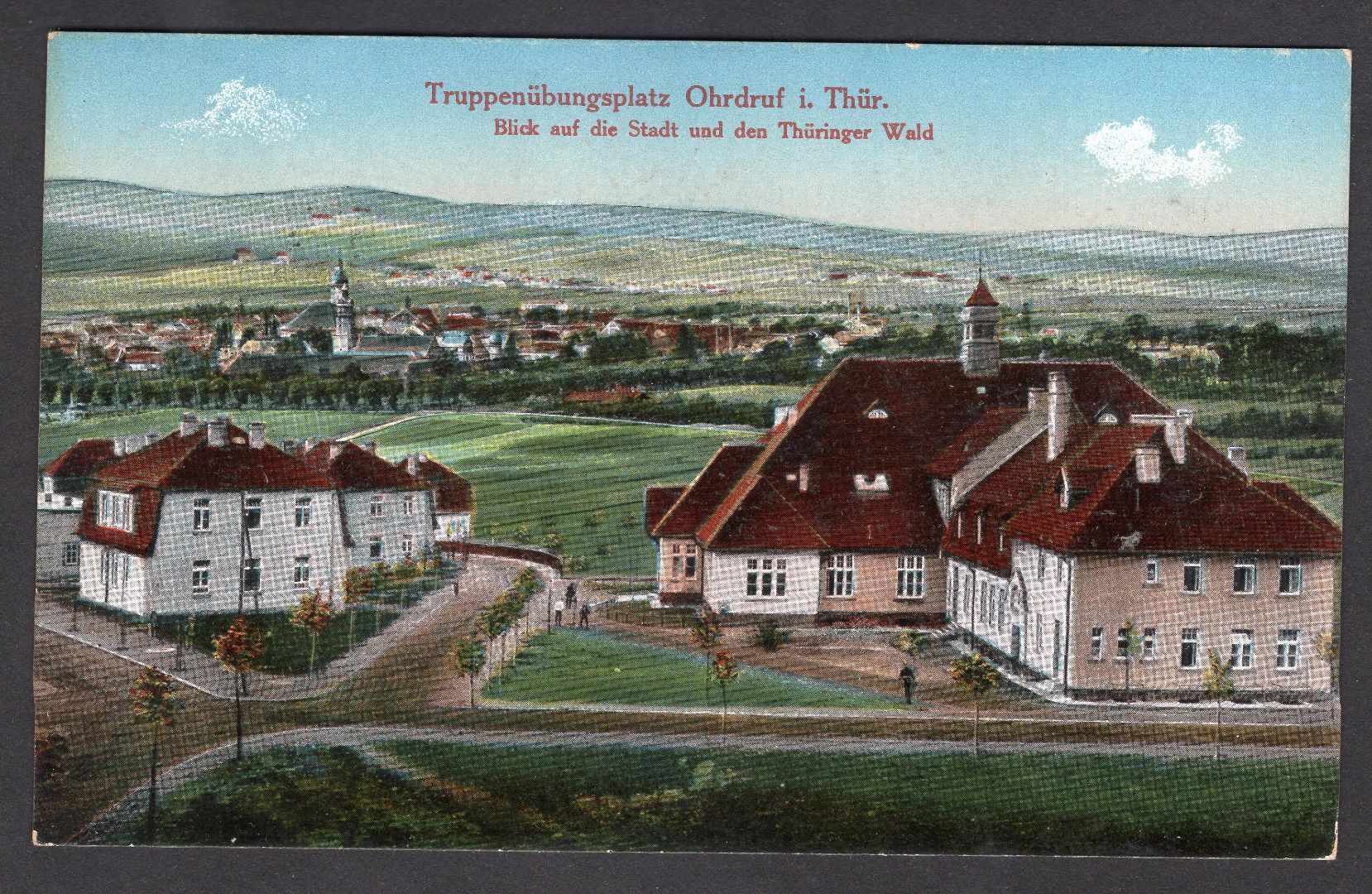
Ohrdruf military training area, sent as field post in 1916 – cards of garrisons and training areas are a collecting field of their own
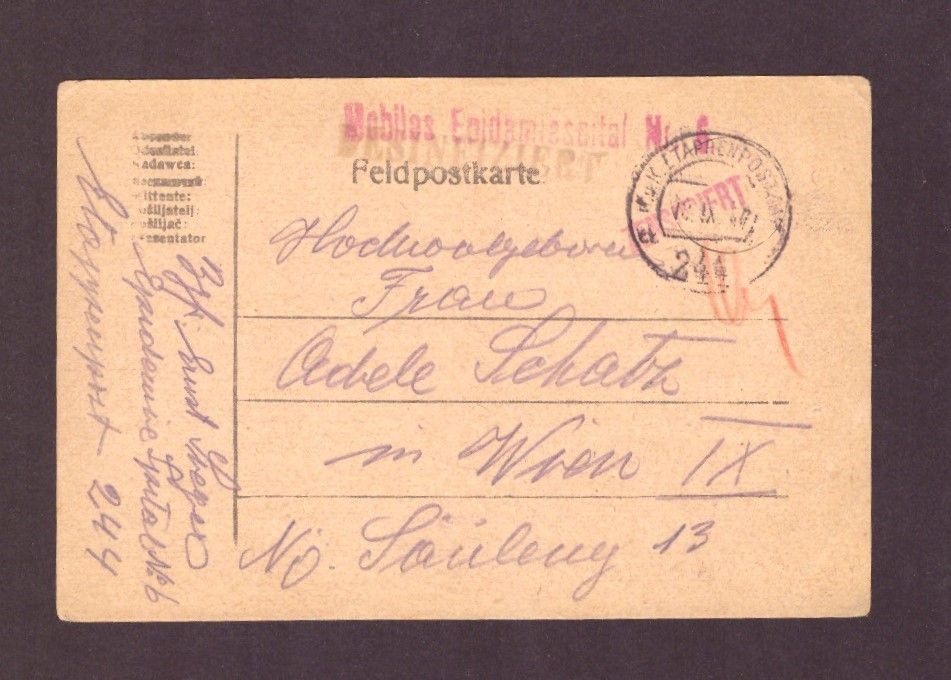
Field post card via the rear-area post office (Etappenpost) 244 to Vienna, with a disinfection note
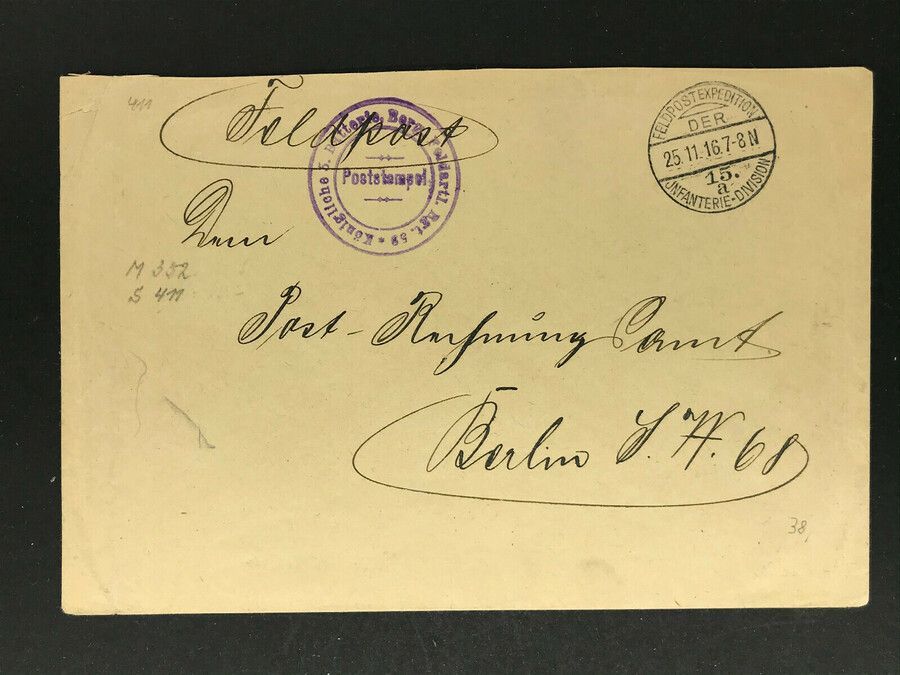
Field post cover 1916 with the postmark of the field post office of the 15th Infantry Division, addressed to the Post-Rechnungs-Amt in Berlin
Field post is the mail between soldiers and their families at home. In both world wars ordinary letters and cards up to a certain weight were free of postage – instead of a stamp they bear the endorsement “Feldpost” and the field post postmarks.
For collectors, field post is part of postal history: postmarks, routes and endorsements tell where and when an item travelled. In addition there are field post picture postcards with views of garrisons, military hospitals and occupied areas.
Instead of the unit designation the items bear a field post number, and the postmarks give no place name. There were special admission stamps for air field post letters and parcels, and many items show traces of censorship by field post inspection offices. On covers from 1933–1945, historical symbols of that period are made unrecognisable in the images in our shop.
Unit and place
Scarce units and theatres – such as the navy, rear areas, colonies or operations outside Europe – are more sought after than the common field post from home.
Postmarks and endorsements
Clearly legible field post postmarks and unit cachets, censor marks or endorsements such as “zurück” (returned) make an item meaningful.
Content and motif
Letters with their contents and picture postcards with scarce motifs are popular. Identifying the unit behind a field post number makes an item even more interesting.
Condition
Creases and signs of use are normal for field post. Clean postmarks and complete covers increase the value.
We buy field post as part of postal history – single items as well as collections and bundles of family letters. We do not buy medals, badges or other militaria.
Field post in our shop
Field post letters, cards and picture postcards – every item described individually, with postmark, unit and route.
Field post WWI → · Field post WWII → · Field post postcards → · International field post → · Glossary →
Field post letters or a bundle of letters to sell?
We are happy to take a look at your items – the initial assessment is free and without obligation.
Sell letters & picture postcards →
sammlershop-tk@gmx.net · Phone & WhatsApp +49 176 63156585 (Mon–Fri 10 am–6 pm)