GUIDE · IDENTIFYING STAMPS
Almost every stamp offer in the German-speaking world quotes a Michel number. Here we explain what it means, how to read the additions and what it is used for when buying and selling.
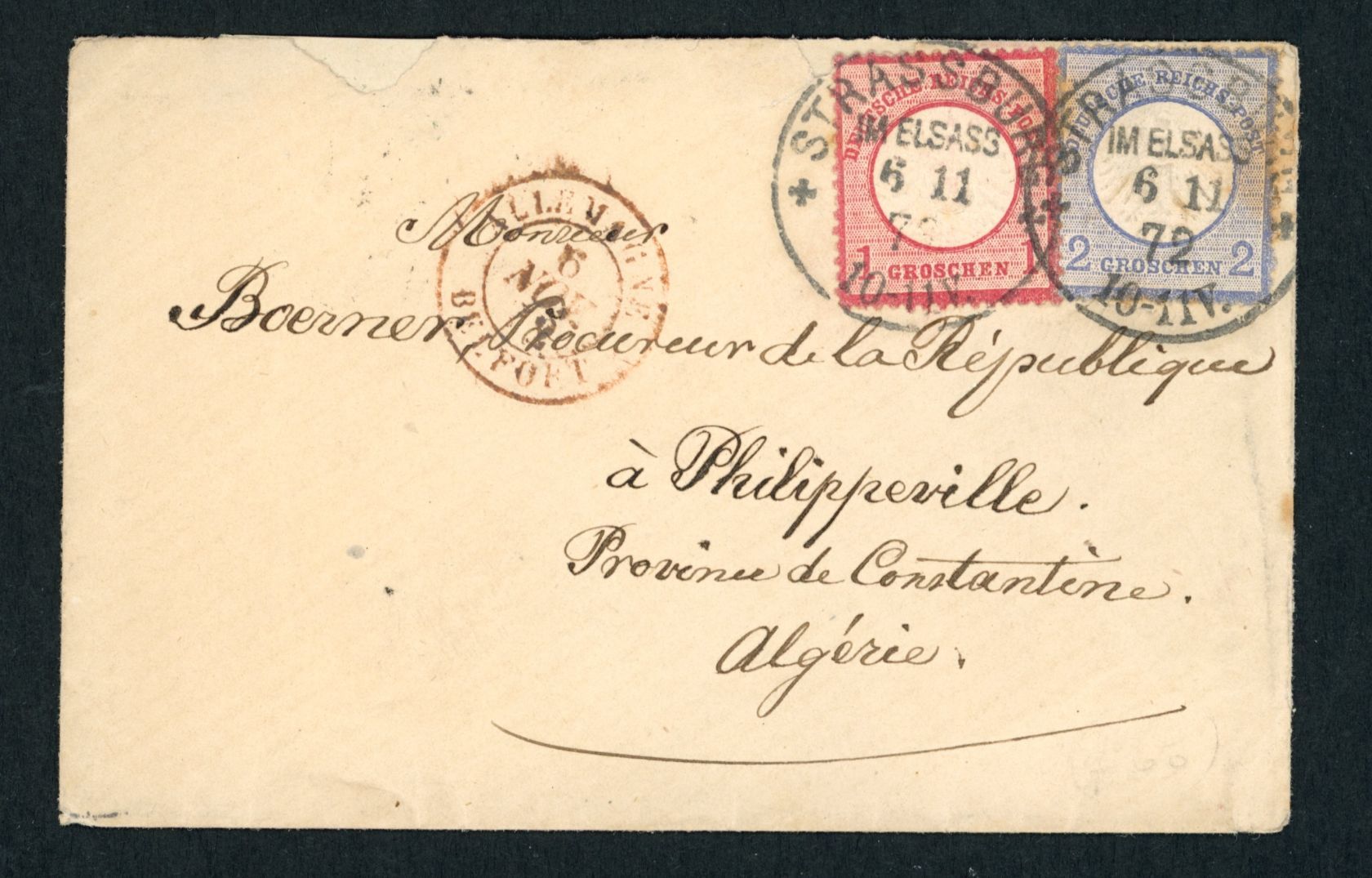
Cover from 1872 with two large shield (Brustschild) stamps – each stamp has its own Michel number, here 5 and 19
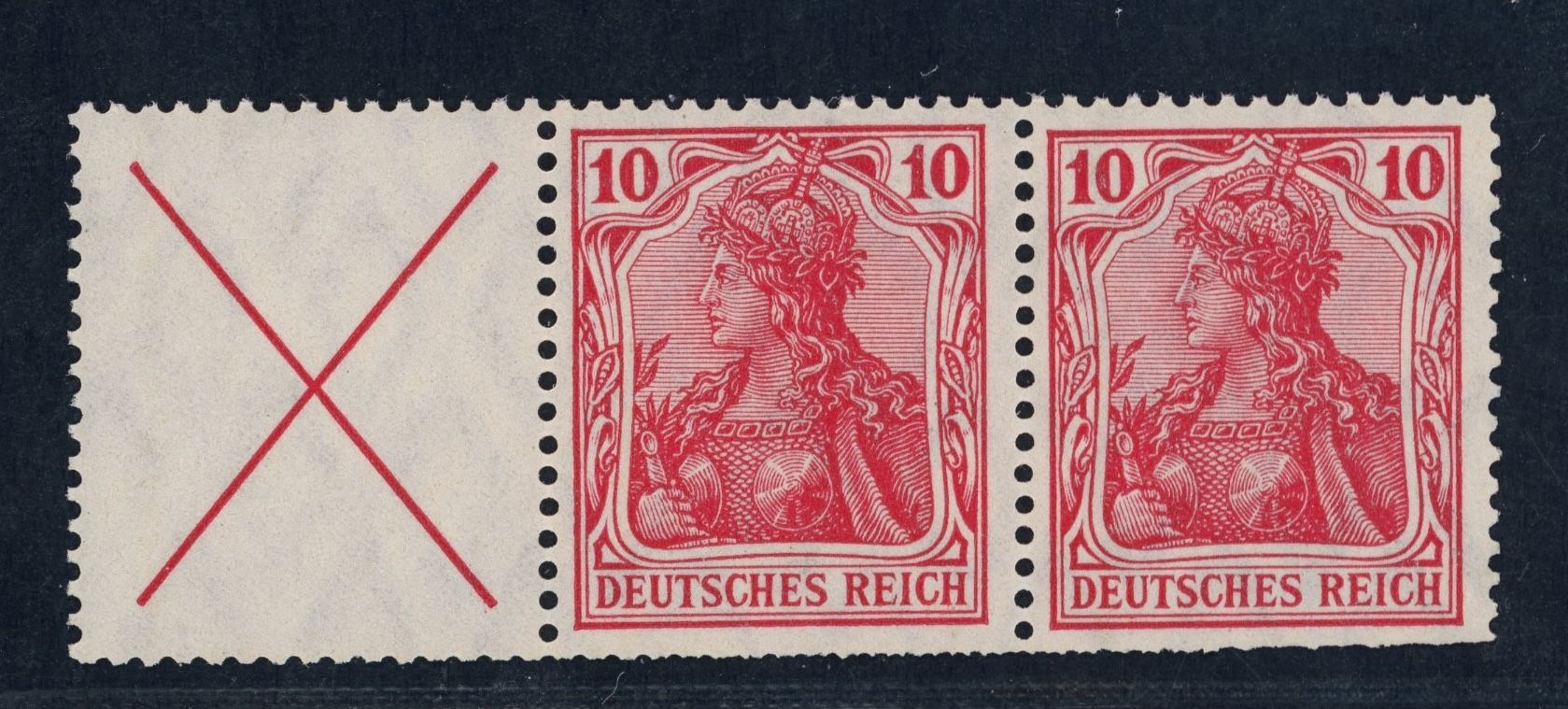
Se-tenant with a St Andrew’s cross field and two Germania stamps – se-tenants have their own numbers, here W 4
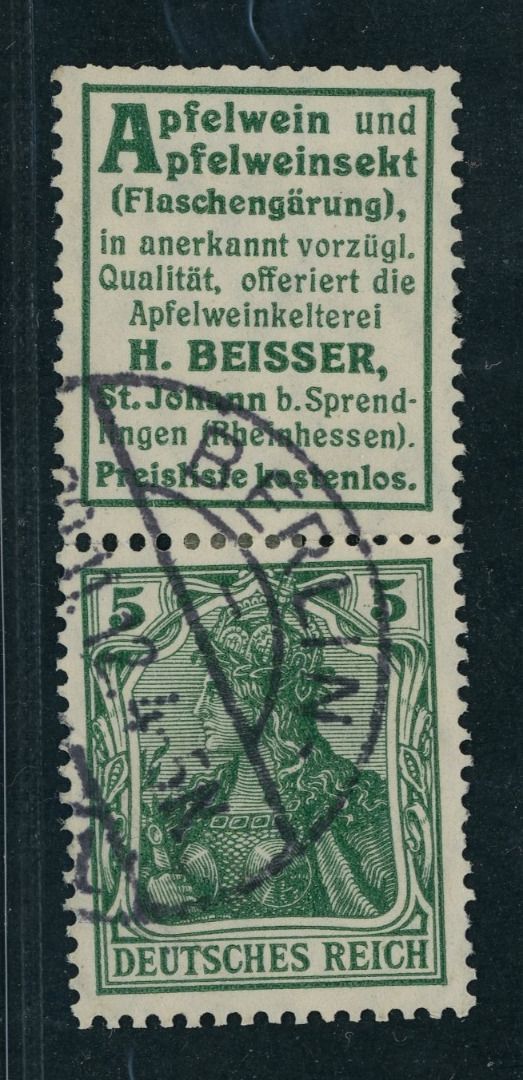
Germania with an advertising label for cider (“Apfelwein”) – a vertical se-tenant with its own number, here S 1.7
The Michel number is the number under which a stamp is listed in the MICHEL catalogue – the most widely used stamp catalogue in Germany, Austria and Switzerland. Within a collecting area the issues are usually numbered in the order in which they appeared.
Important: the same number exists again in every area. A stamp is only clearly identified by area and number, for example “German Reich Michel number 5” or “Bavaria Michel number 1”.
The number is often followed by letters or symbols. They distinguish stamps that look the same at first glance:
Clear identification
With area and Michel number every collector knows at once which stamp is meant – regardless of language and description.
Organising a collection
Printed albums and want lists are arranged by Michel numbers, so you can quickly see what is missing.
Understanding catalogue value
The catalogue gives guide values for mint never hinged, mint, used and on cover. In the trade, actual prices are usually well below.
Spotting fine differences
Shade, perforation, paper or watermark can change the value considerably. Tools such as a perforation gauge and a watermark detector help.
In the English-speaking world Stanley Gibbons and Scott are common, in France Yvert & Tellier. Each catalogue has its own numbering – a Michel number cannot simply be translated into another catalogue number.
In our stamp and cover listings we quote the Michel number – so you can see at once which stamp you are buying. If you would like to sell your collection, you do not need to identify anything yourself: we do that for you.
Read on and browse
We explain more terms about stamps, covers and picture postcards in our glossary.
Glossary → · Inherited a stamp collection → · Se-tenants in our shop →
A collection to sell?
We are happy to look at your collection and identify the stamps for you – the initial assessment is free and without obligation.
sammlershop-tk@gmx.net · Phone & WhatsApp +49 176 63156585 (Mon–Fri 10 am–6 pm)